How this page came to be: along the way I photographed placards, buildings and artifacts and sent them to Claude to ask about, then did some further reading off its answers; back home, I used Claude Code to gather and organize those scattered Q&As into these pages.
I · The Ancient & Classical World
Ancient Egypt: artifacts, gods, and provenance
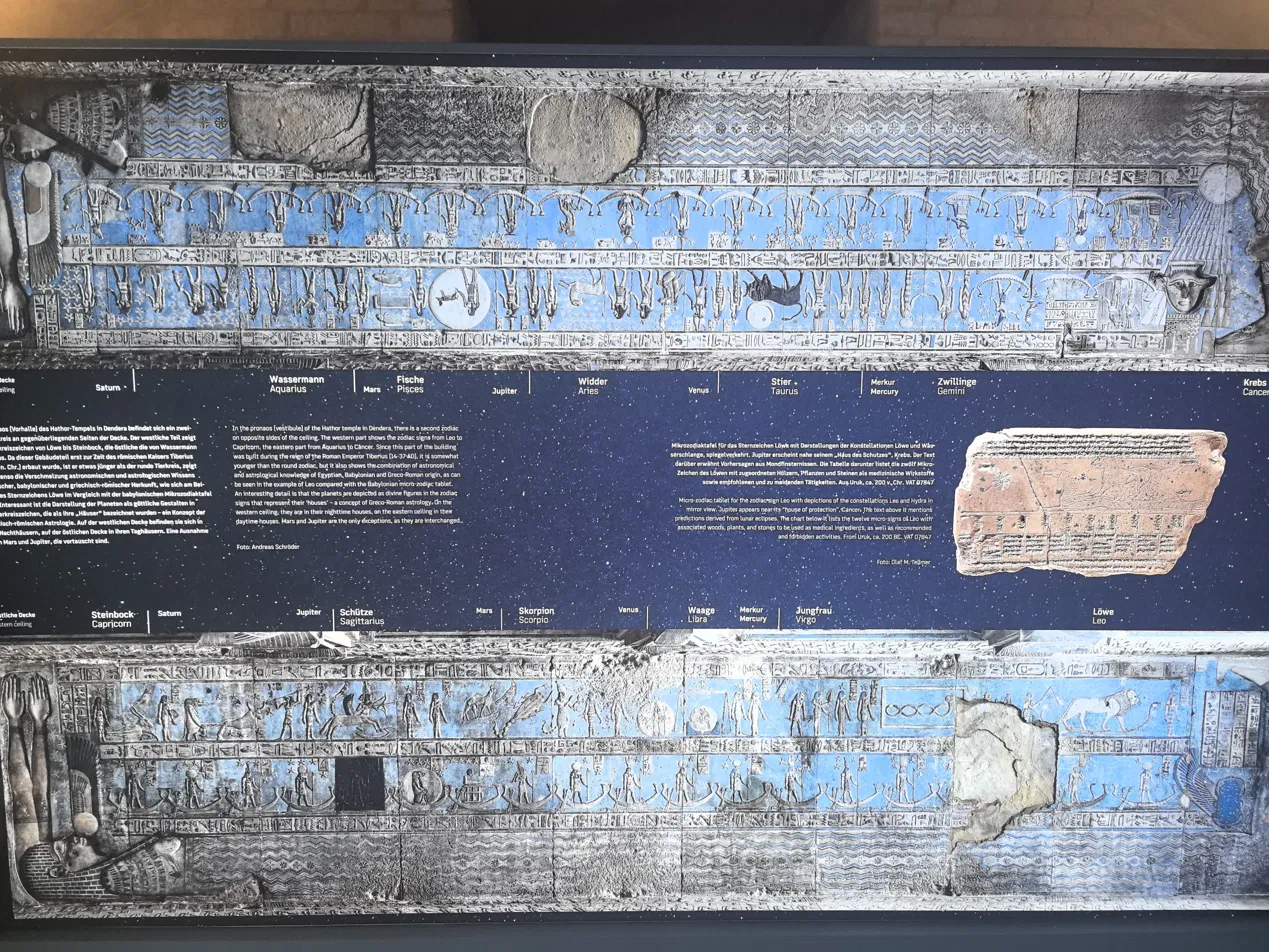
Prompted in the Egyptian wing of the Neues Museum, Museum Island, Berlin (07-12)
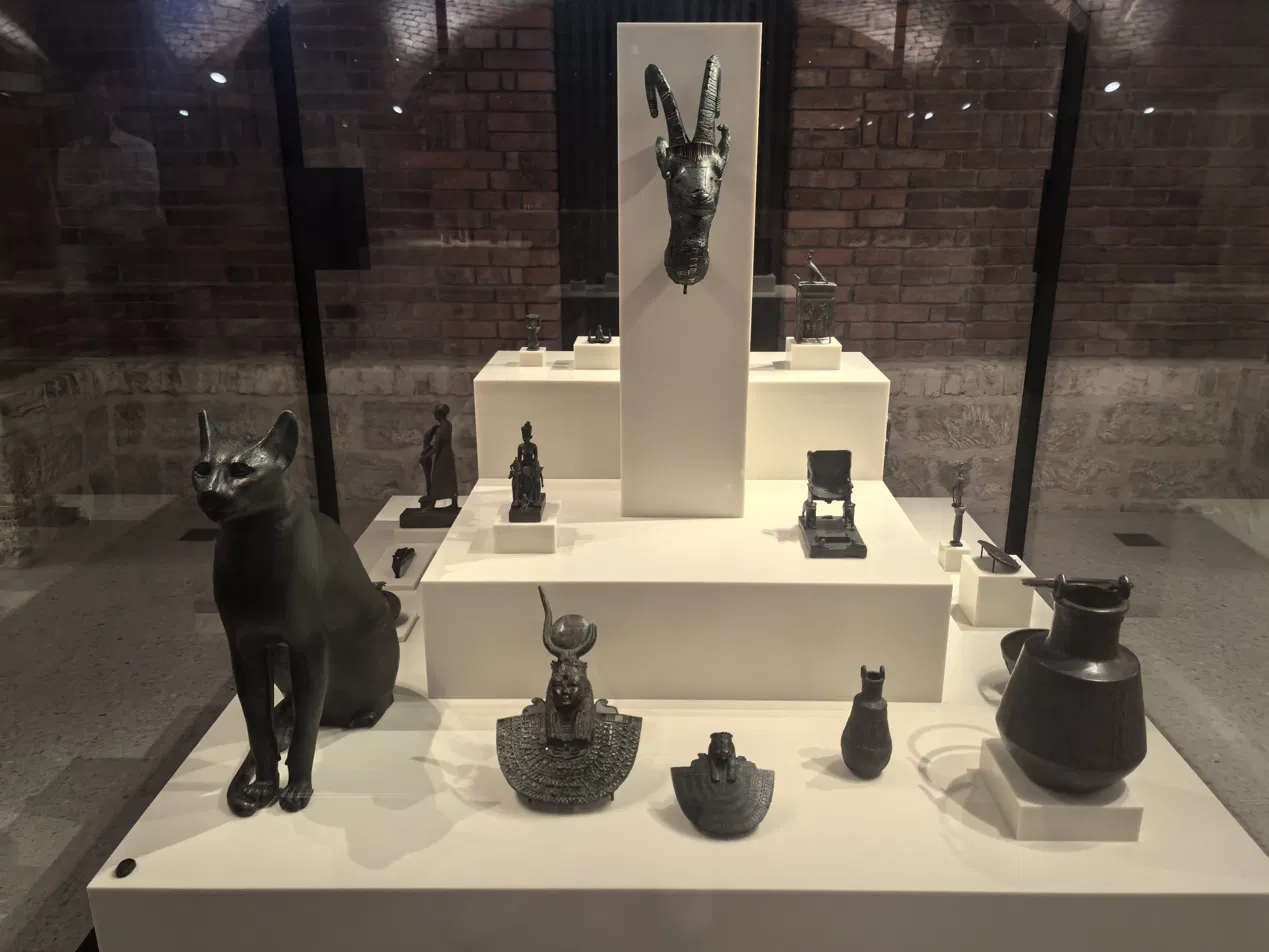
- How did the ancient Egyptians write, and what gods did they worship?They wrote in hieroglyphs (with simplified scripts like hieratic too). Theirs was a polytheistic world in which each city had its patron deity — Ptah at Memphis, Ra at Heliopolis, Amun at Thebes, the cat-goddess Bastet at Bubastis, Isis at Alexandria; the Book of the Dead was a set of spells guiding the deceased through the underworld to the fertile "Field of Reeds."
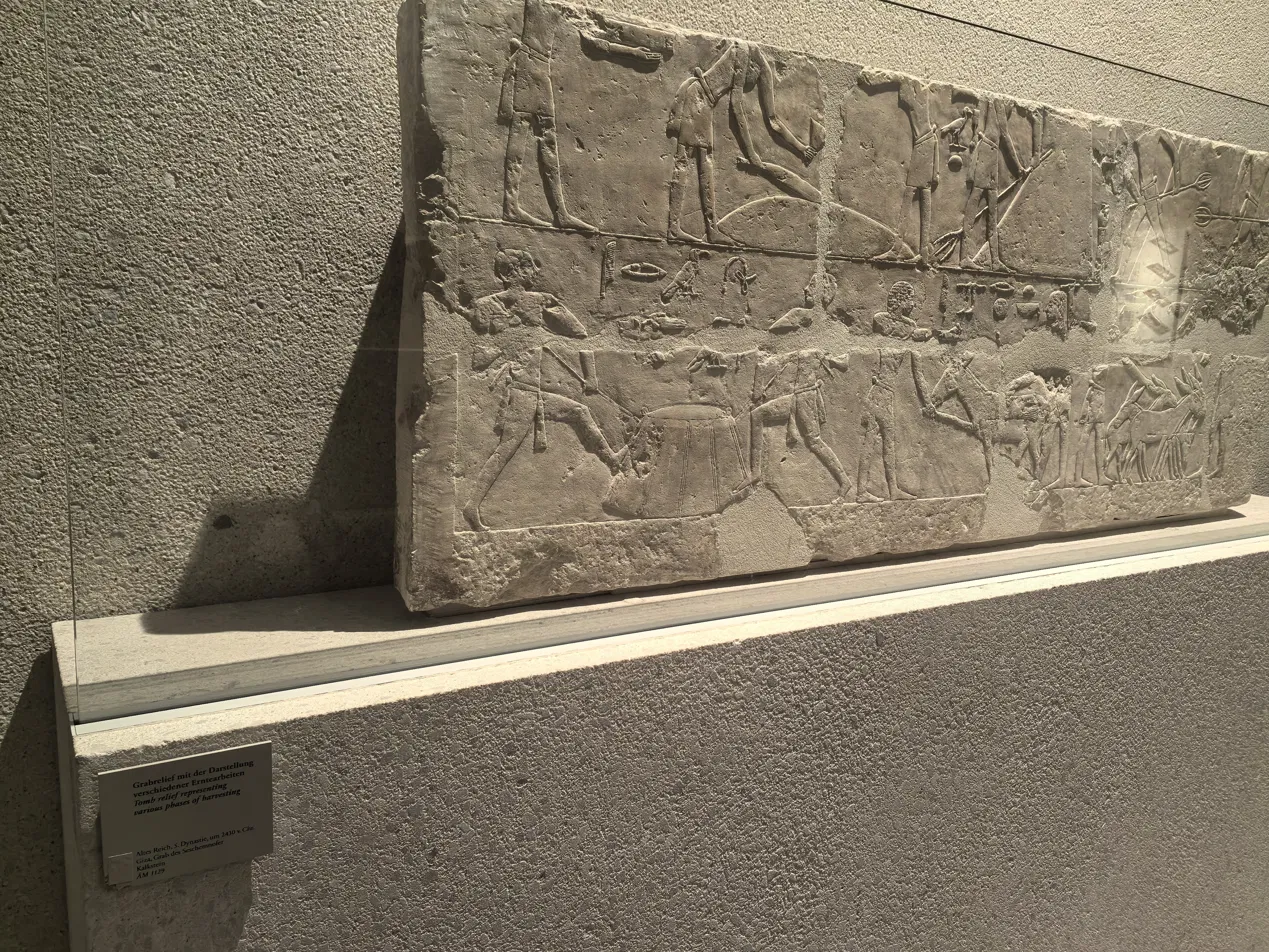
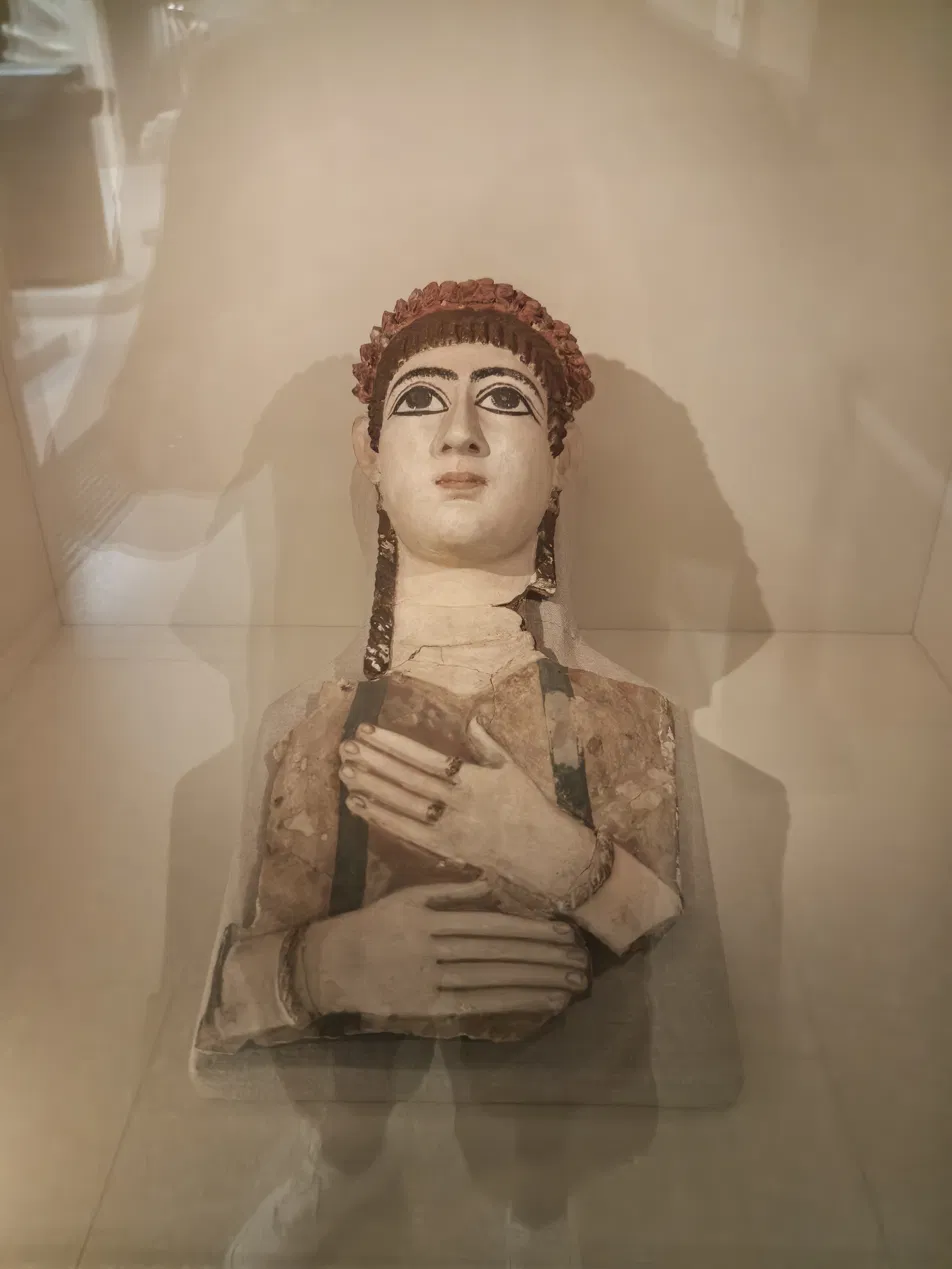
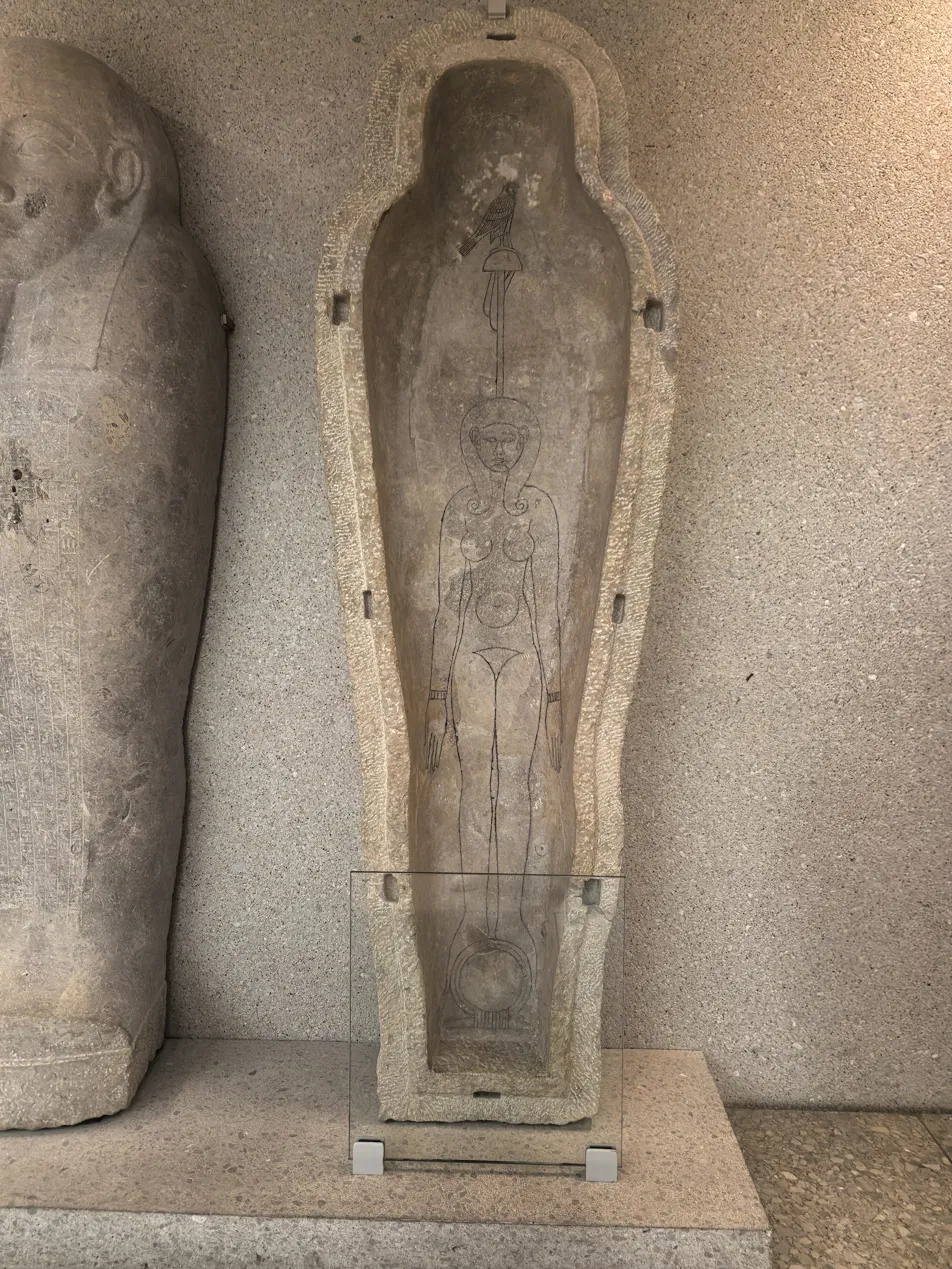
- What were those tomb reliefs, sarcophagi, and mummy masks for?All served belief in the afterlife. Reliefs recorded the deceased's labors and pleasures (like the harvest scene from Sekhemnofer's tomb at Giza, Old Kingdom 5th Dynasty, c. 2430 BC) so they would continue in the beyond; coffin interiors often show the sky-goddess Nut arching protectively over the dead; the mummy masks are Roman-era Fayum style, modeled in stucco and partly gilded to preserve a face.
- Why haven't the pigments faded in three thousand years?Because Egyptian pigments are almost all mineral rather than plant-based:
- black — carbon
- white — gypsum
- red-brown — ochre (iron oxide)
- yellow — yellow ochre, or orpiment (arsenic sulfide)
- green — ground malachite (a copper ore)
- blue — "Egyptian blue," humanity's first synthetic pigment (sand, copper and a calcium flux fired at ~850–1000°C into calcium-copper-silicate crystals, then ground)
- How did Berlin acquire this Egyptian collection?Over nearly two centuries through several routes: early-19th-century bulk purchases by the Prussian crown (e.g. the Passalacqua collection, 1823), the Lepsius expedition (1842–45) which brought back ~1,500 items by permission of Egypt's ruler, and the late-19th/early-20th-century *partage* system (foreign teams funded digs and split finds with Egypt). The most famous and contested is the Nefertiti bust (excavated at Amarna, 1912), which Egypt has sought to reclaim since the 1920s; the partage was formally legal but rooted in a colonial context.
📷 5 of 15 shown
The Bronze-Age Eastern Mediterranean: Cyprus & Troy
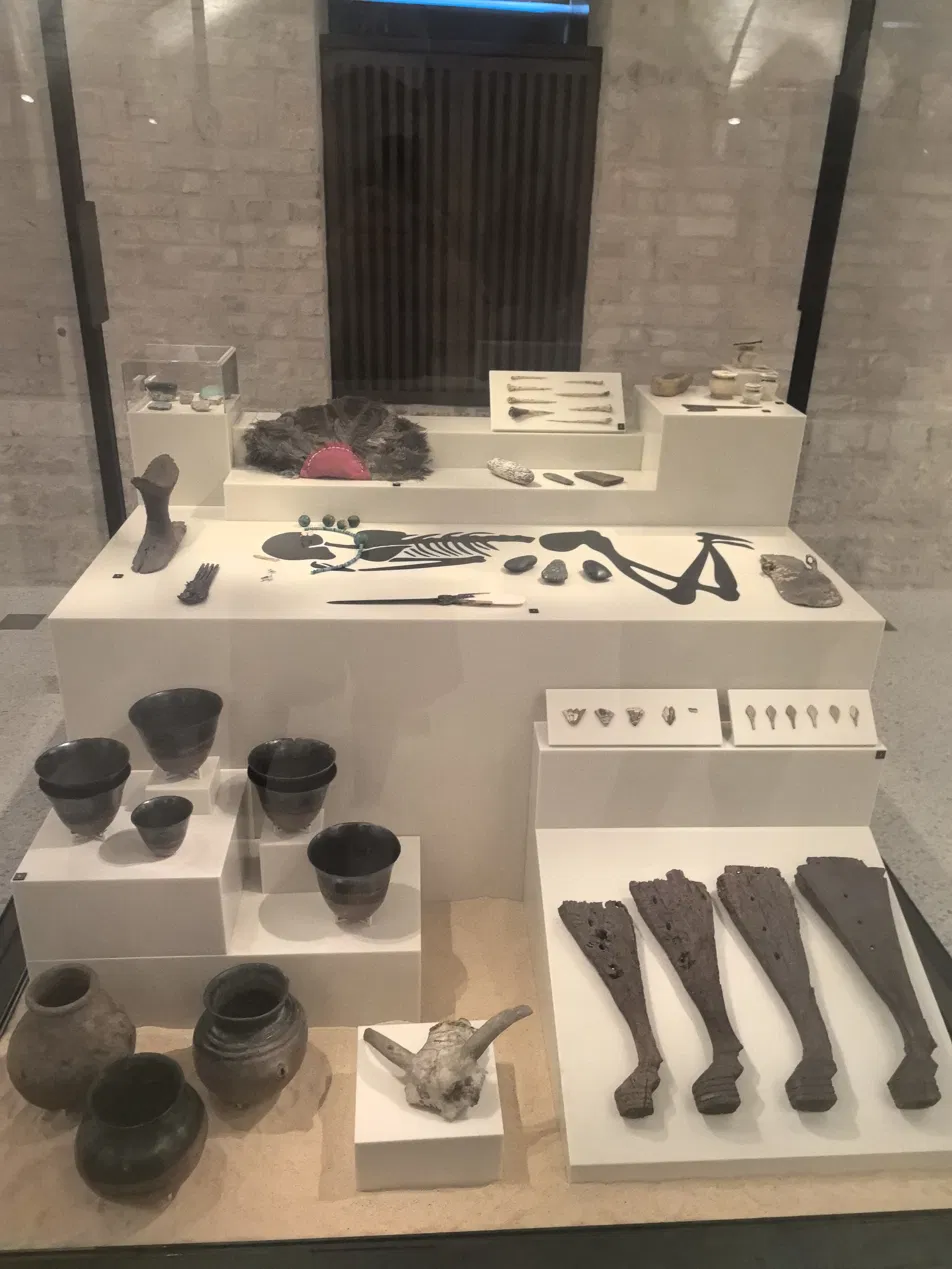
Prompted by a skeleton and grave goods in a display case, which led all the way to Cyprus and Troy (07-12)
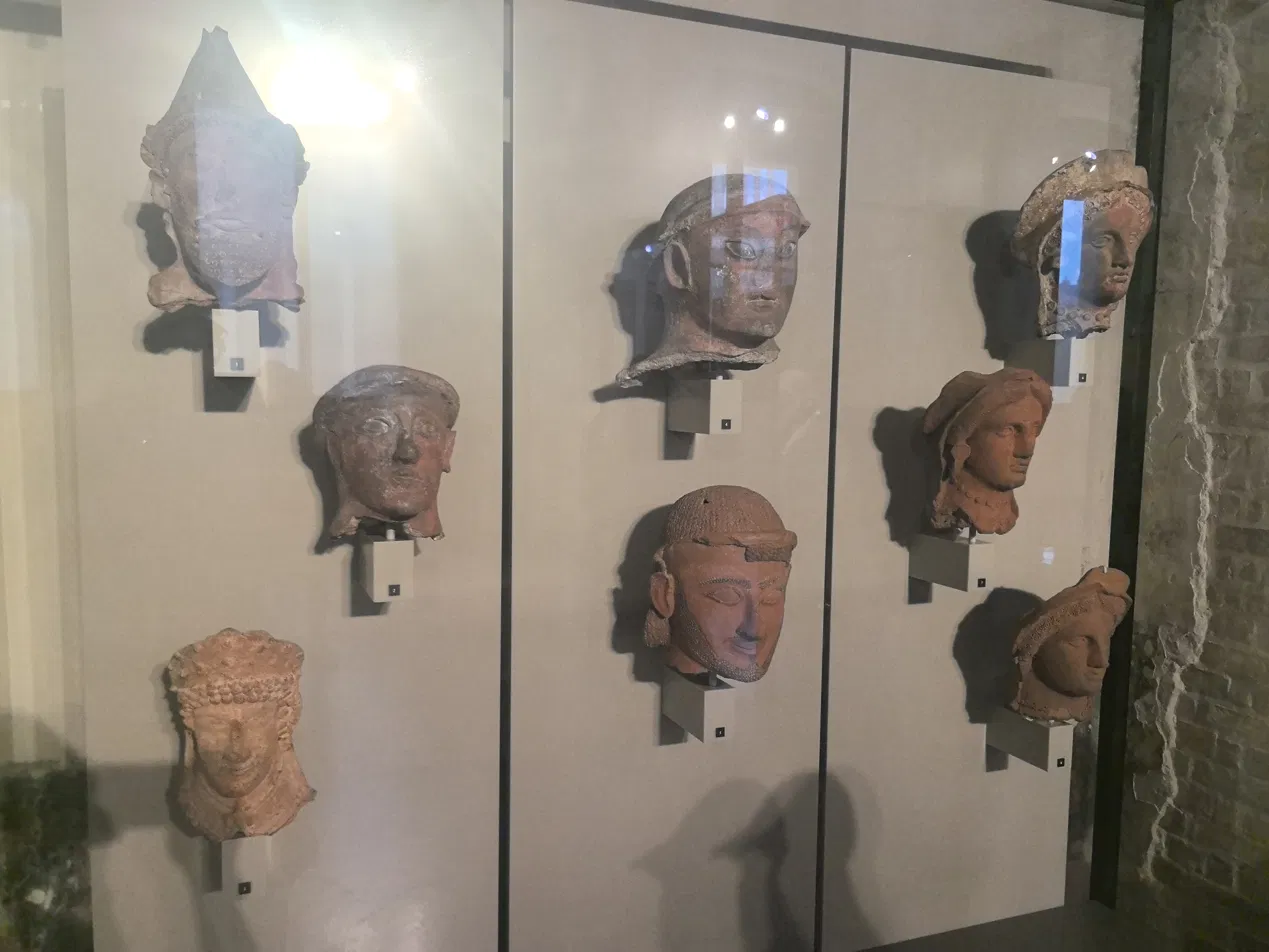
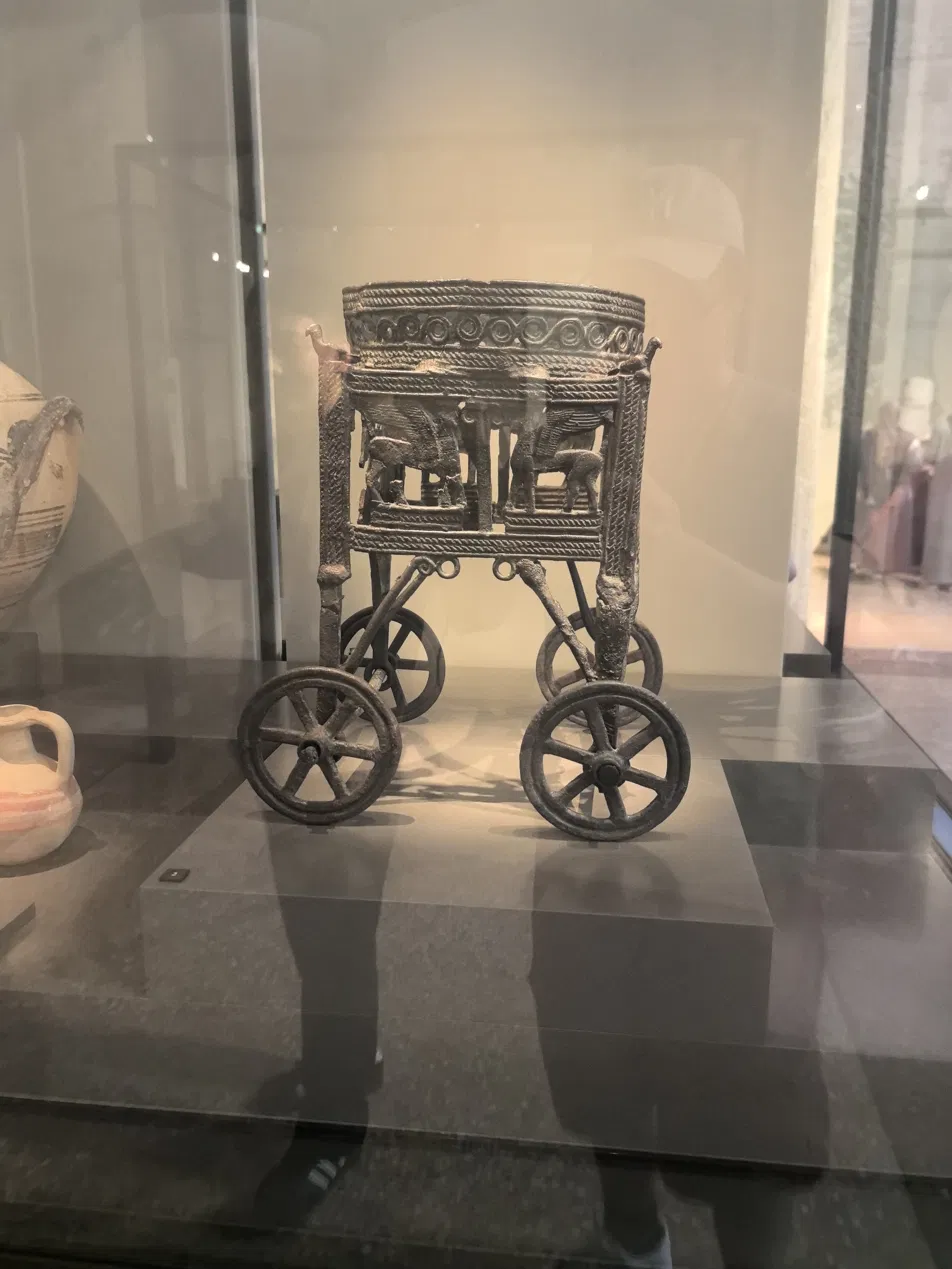
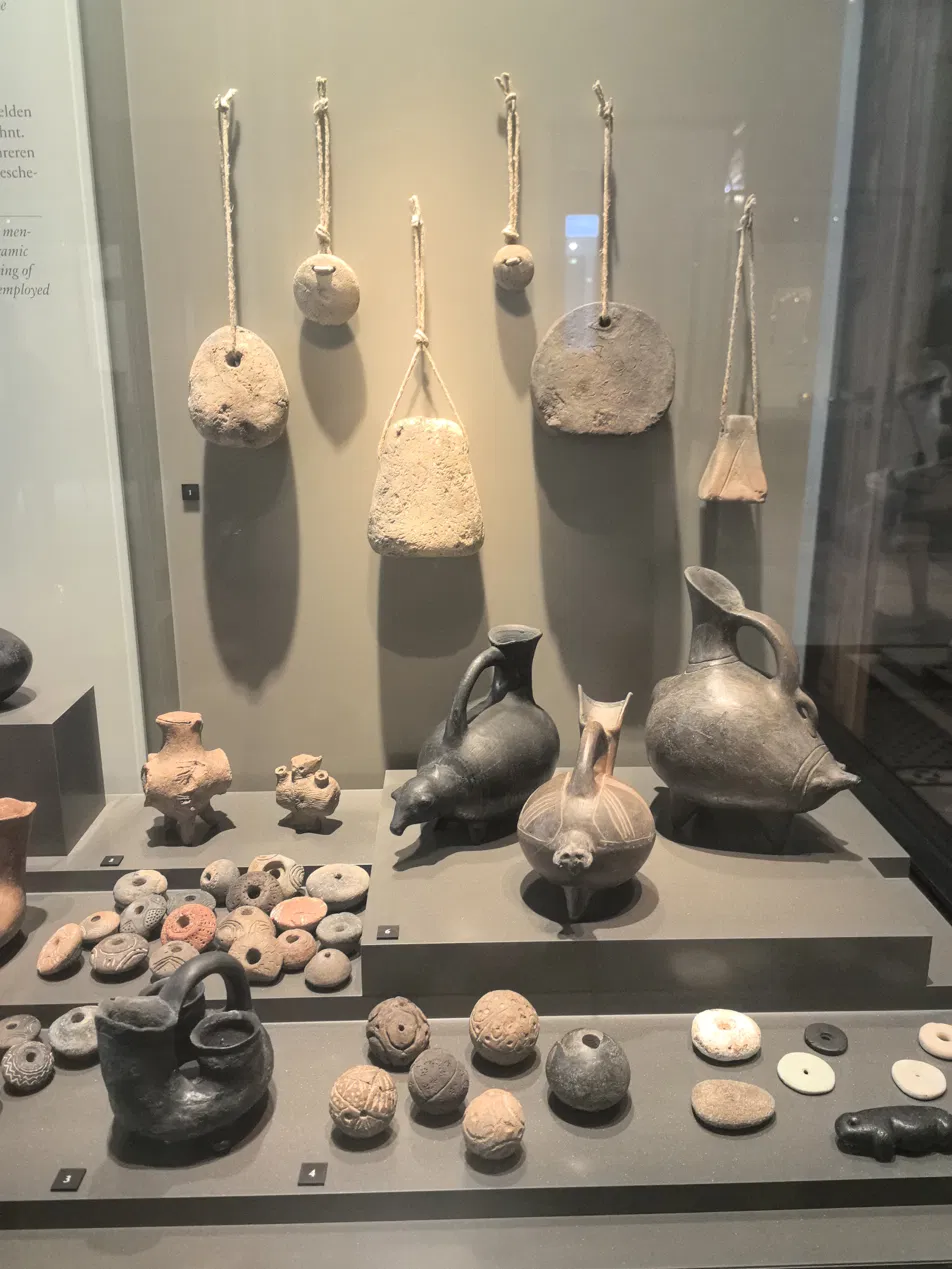
- What was ancient Cypriot civilization like?Cyprus sat at the very crossroads of the eastern Mediterranean — Levant to the east, Egypt to the south, the Aegean to the west — and it produced the strategic metal copper (the name "Cyprus" may share a root with Latin *cuprum*). Its culture was thus "hybrid" from the start: in the Archaic period (750–480 BC) Egyptianizing and Hellenizing styles coexisted, and the Aphrodite/Astarte sanctuary at Idalion left masses of terracotta votive figures (old ones were buried on-site in a *favissa* pit, hence so many survive) — the goddess's double name itself fuses Greek Aphrodite with Phoenician Astarte.
- Where is Troy, and was the Trojan War real?The site is the mound of Hisarlik in northwest Turkey, guarding the Dardanelles strait from the Aegean to the Black Sea — controlling that waterway may be the war's real economic motive. The Homeric myth runs roughly:
- the goddess of discord throws the "golden apple," and Paris gives his judgment;
- Paris carries off Helen, queen of Sparta;
- the Greek host crosses the sea for a ten-year siege;
- the wooden horse, and the fall of Troy.
📷 5 of 11 shown
Greek civilization & the Pergamon Altar
Prompted in the Pergamon Museum, Berlin (07-12)
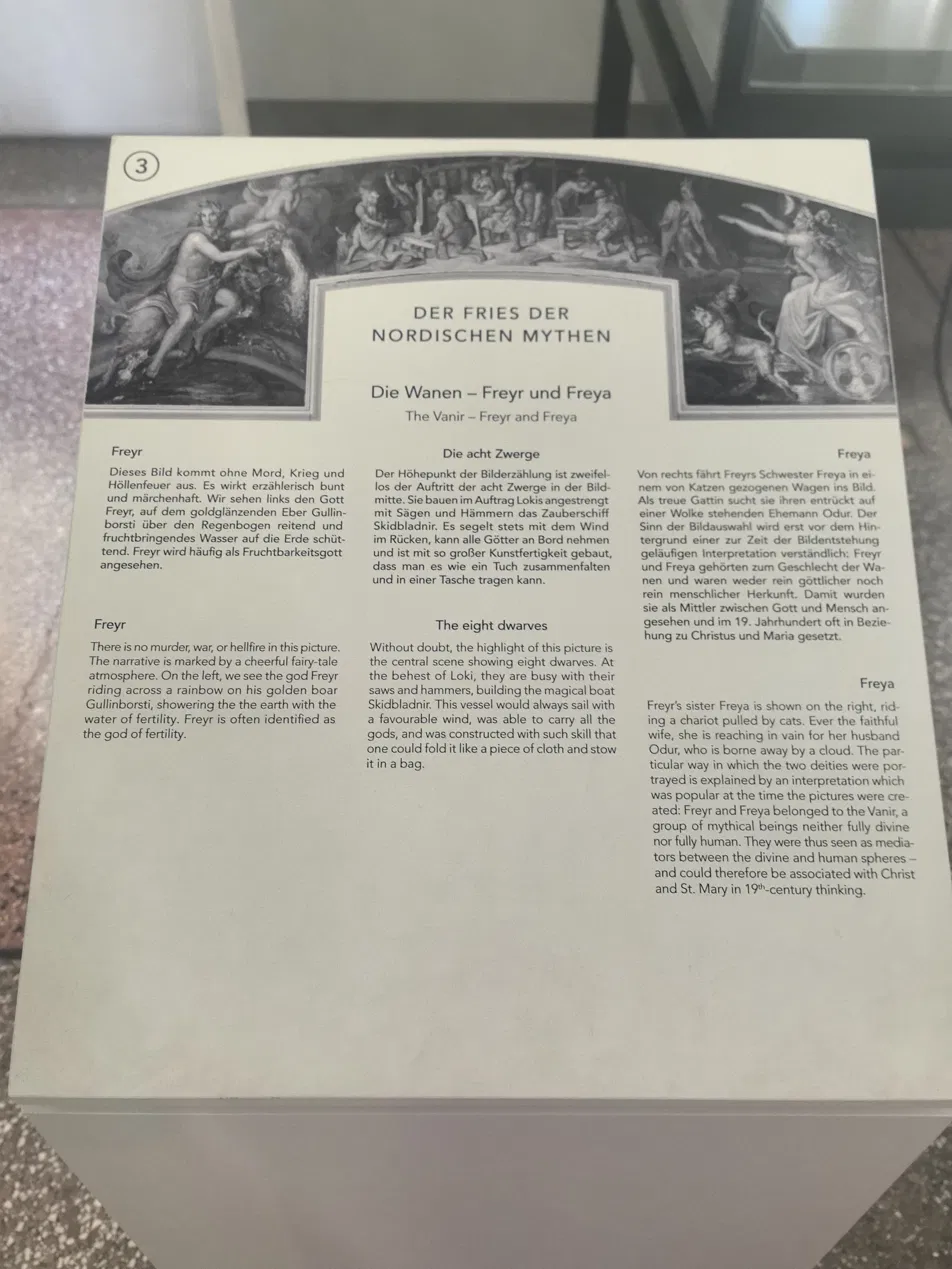
- What kind of whole was Greek civilization?Not a single country but a two-thousand-year civilization of hundreds of city-states sharing a language and religion, passing through Aegean (Minoan/Mycenaean), Dark Age, Archaic, Classical and Hellenistic phases. The *poleis* were politically independent and endlessly at war (Athens and Sparta the archetypes), yet together they created democracy, philosophy (Socrates–Plato–Aristotle), theater and the Olympics.
- How are Greece, Macedon, and Rome related?The three form a "relay":
- the fragmented Greek city-states never managed to unify;
- the northern kingdom of Macedon, under Philip II and Alexander, unified Greece by force and marched east to destroy Persia, carrying Greek culture to Central Asia;
- after Alexander's death his empire splintered into Hellenistic kingdoms (Pergamon, Ptolemaic Egypt, Seleucid);
- Rome, from the 3rd–2nd centuries BC, swallowed them one by one, ending up "conquering Greece militarily but conquered by Greece culturally" — the Greco-Roman classical synthesis.
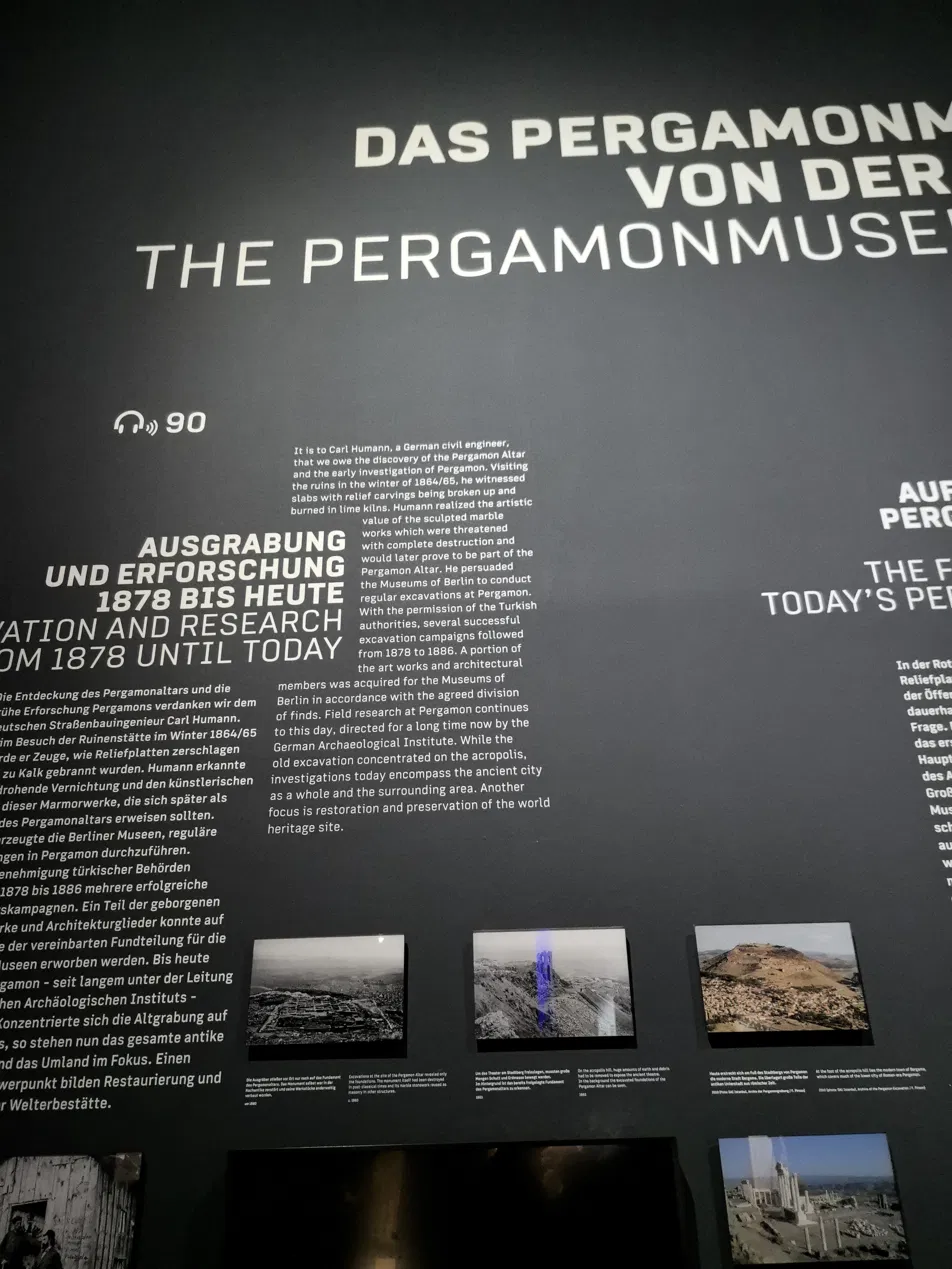
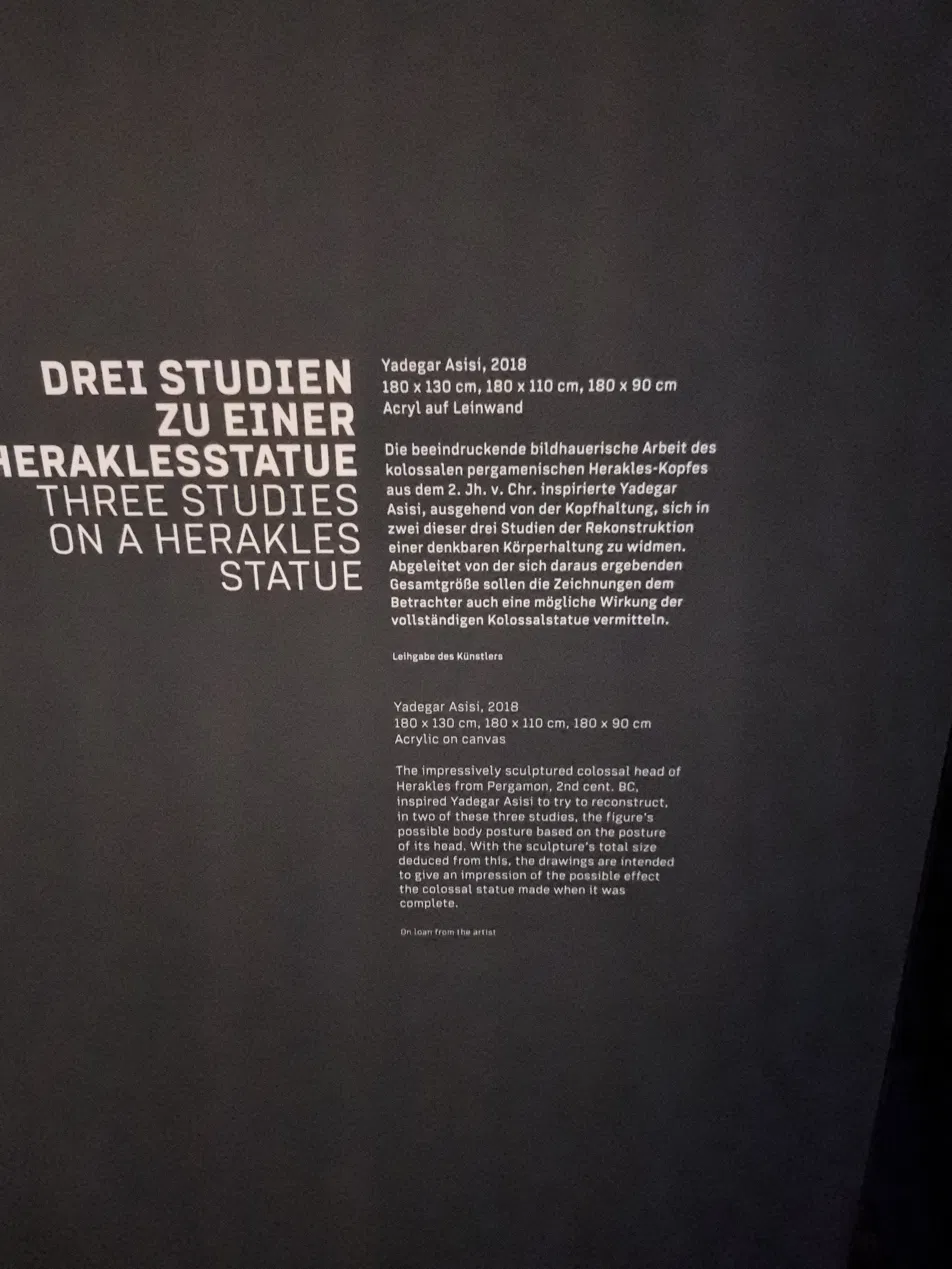
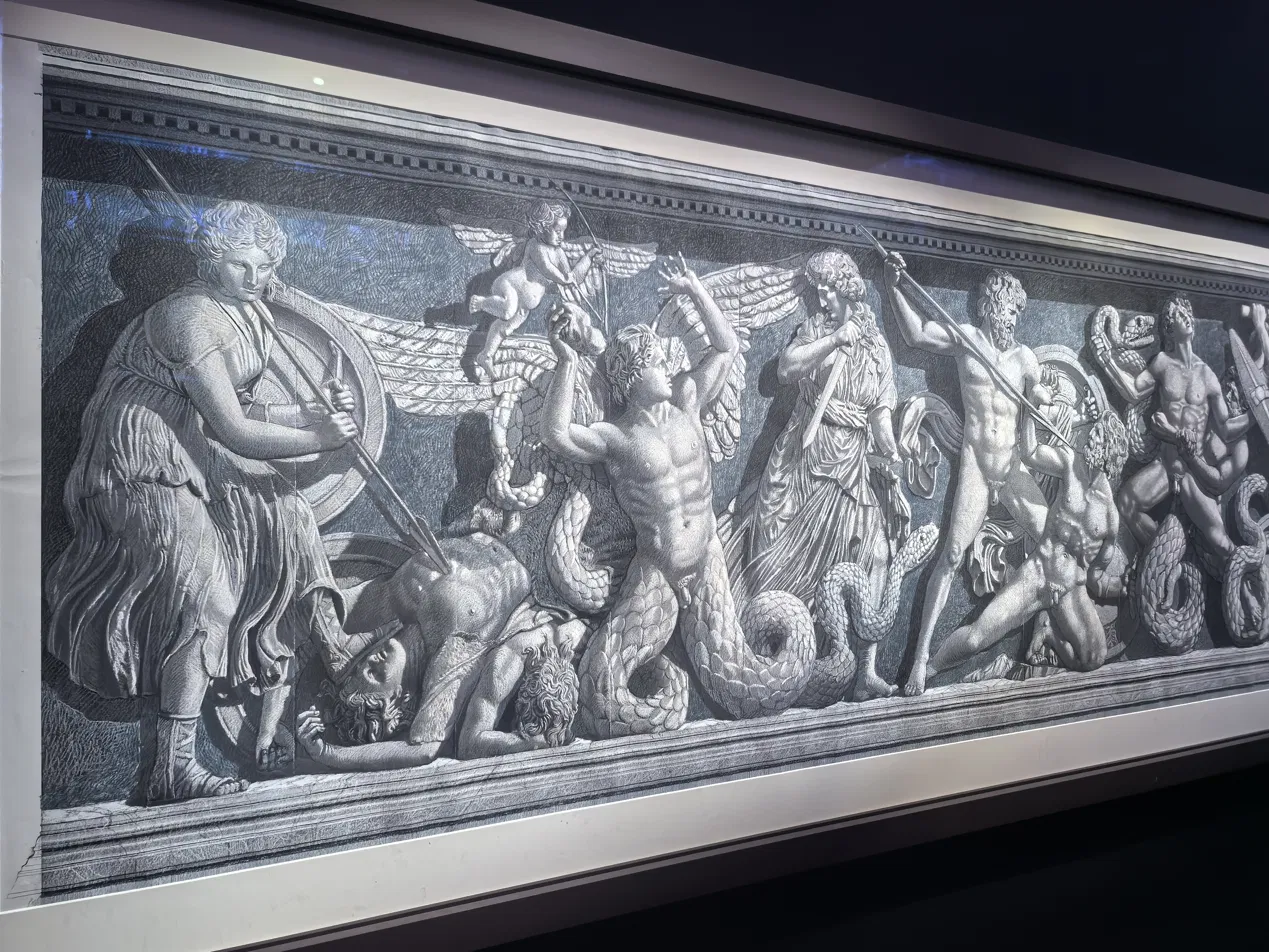
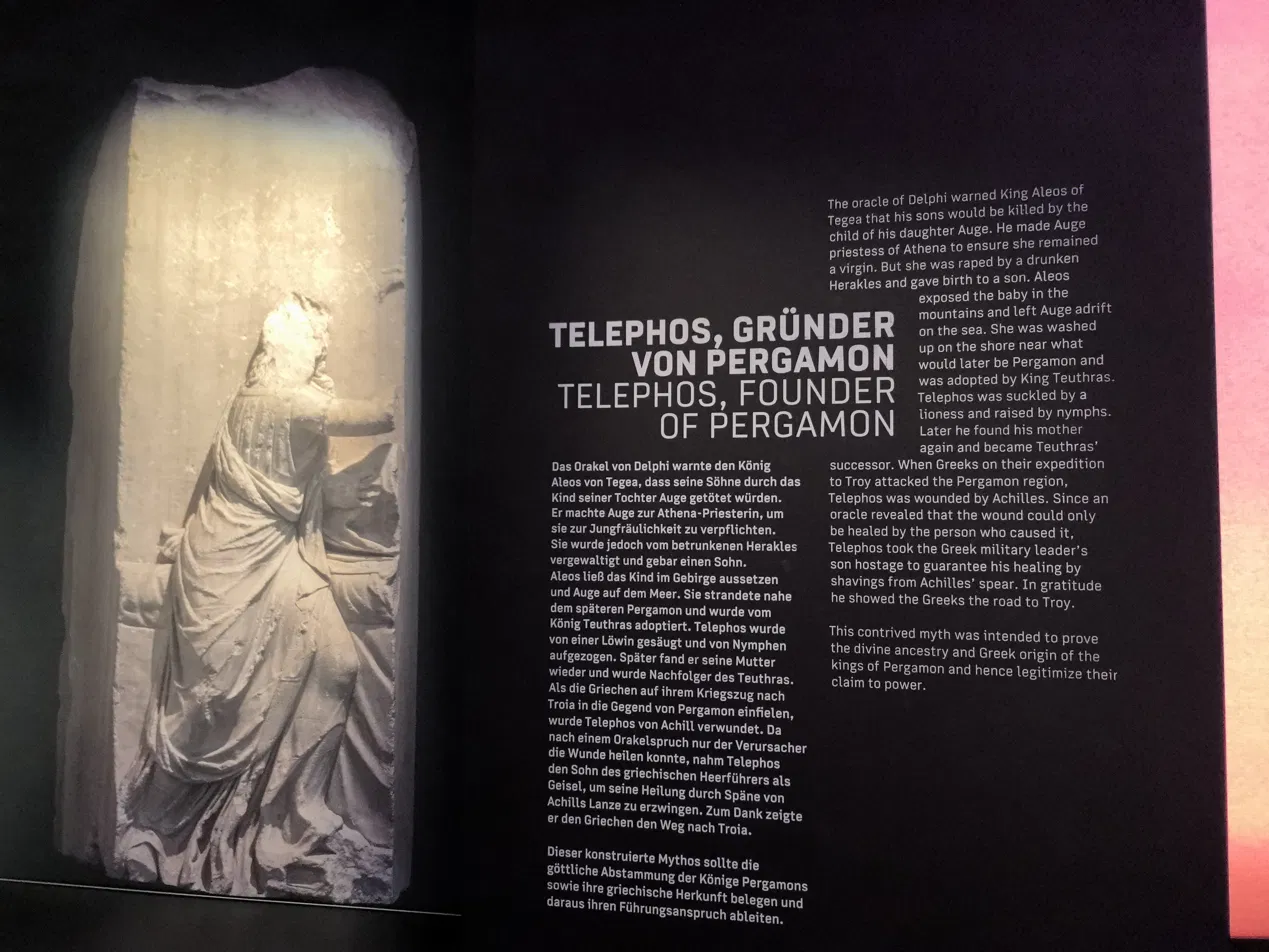
- Why is the Pergamon Altar the museum's treasure?Built by the Hellenistic kingdom of Pergamon (modern Bergama, Turkey; capital of the Attalid dynasty) at the height of Eumenes II, its "Gigantomachy" frieze runs ~113 m and pushes high relief to the point where limbs almost burst from the wall, marking Greek art's shift from "perfect stillness" to "violent motion." The altar had already been dismantled in the 7th century AD for city walls and lime; engineer Carl Humann, from 1878, salvaged the fragments from Byzantine walls and rubble and shipped them to Berlin under a partage deal, reconstructing the façade there (the whole altar was not carted off intact).
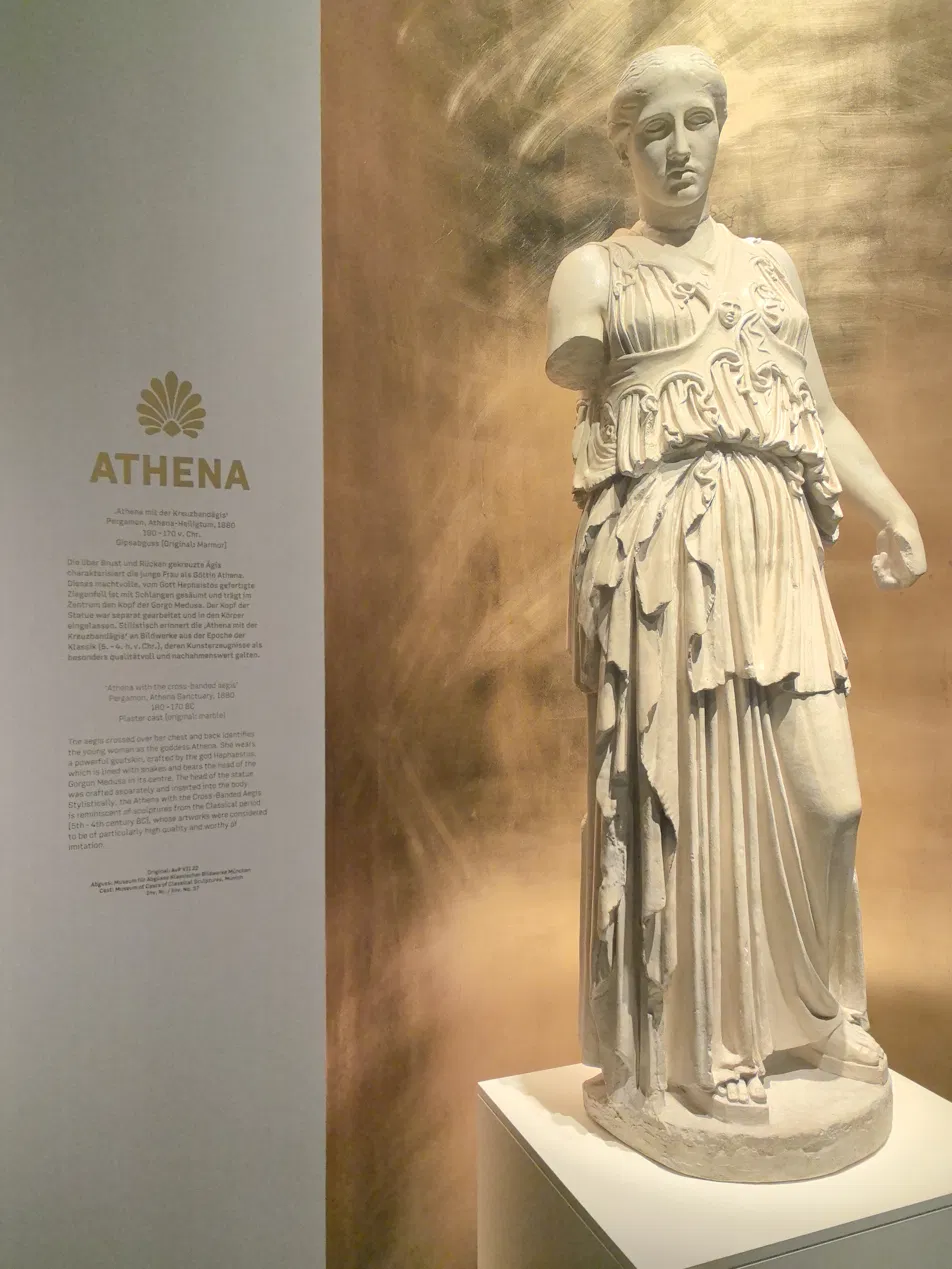
- What is the Greek pantheon's structure?The twelve Olympians are headed by the three brothers Zeus (sky), Poseidon (sea) and Hades (underworld); the altar's "Gigantomachy" is an allegory of "order/civilization defeating chaos/barbarism," which the Pergamenes used to symbolize their victory over the invading Galatians (Celts). Myth follows a three-generation "creation-and-usurpation" line:
- Chaos births Gaia (Earth) and Uranus (Sky);
- the Titan Kronos takes power;
- Zeus leads the Olympians to defeat the Titans (and only then comes the war with the Giants).
📷 5 of 18 shown
The rise and fall of Rome & the Germanic world
Prompted by a long conversation that grew out of the museum exhibits (07-11)
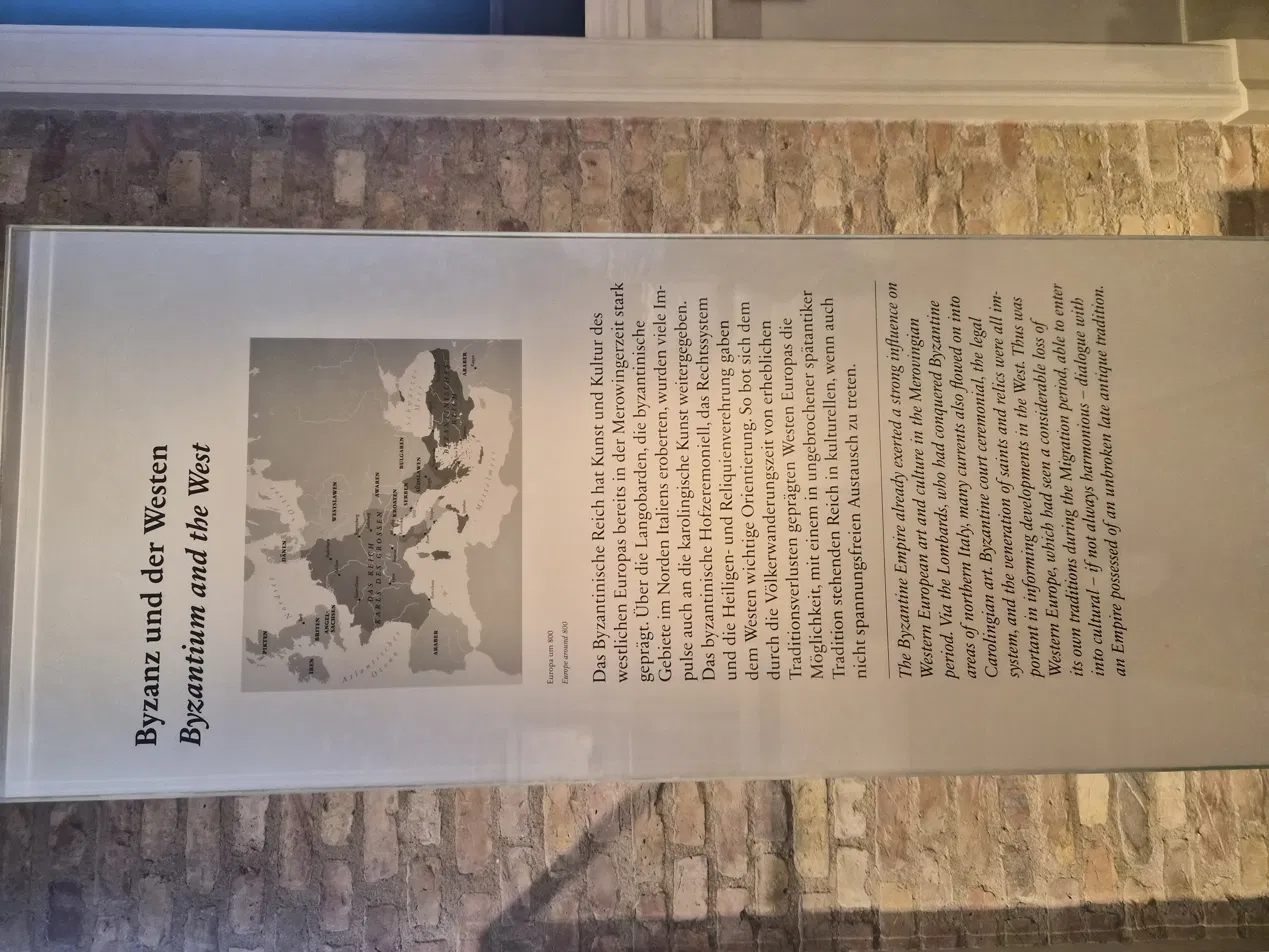
- Why did the Western Roman Empire fall, and how did the Eastern survive?The West fell in AD 476 from many causes: political corruption and civil war, economic decline and heavy taxes, an army increasingly reliant on Germanic mercenaries, plus the relentless pressure of the Migration Period. The Eastern Empire (Byzantium), backed by a wealthier east, the formidable walls of Constantinople and a stable bureaucracy, lasted nearly another thousand years, falling only in 1453 to the Ottomans.
- Who were the Germanic peoples, and why "barbarians"?They were the many tribes (Franks, Saxons, Goths, Vandals, Lombards, etc.) that took shape in northern Europe c. 2000–500 BC and lived in the forests east of the Rhine — not one unified people; "barbarian" was simply the Roman term for outsiders. For ~500 years they alternately fought and traded with Rome: at the Battle of the Teutoburg Forest (AD 9) they annihilated three legions, forcing Rome to abandon the land east of the Rhine — a frontier that kept the Germanic world from being Latinized and preserved its own language.
- Whose ancestors did the Germanic tribes become?Most merged into today's western Europeans:
- Franks — the western branch entered Gaul to become the French (France = "land of the Franks"), the eastern branch stayed on the Rhine as Germans
- Saxons — one branch crossed the sea to fuse with the Angles into the English (Anglo-Saxon)
- Goths — founded kingdoms in Spain and Italy, then died out
- Vandals — reached North Africa and vanished, leaving only the word "vandalism"
- Lombards — merged into Italy (Milan's Lombardy is named for them)
The Renaissance: antiquity reborn
Prompted by a question on 07-14
- How is the Renaissance related to ancient Greek civilization?The Renaissance (French for "rebirth") was essentially the rediscovery and reinterpretation of classical antiquity, especially Greek thought and art — humanists sought out Greek texts lost or neglected in the Middle Ages, which returned via Byzantine scholars fleeing west and the Arab world's preservation and translation, igniting a revival in philosophy, art and science.
- Did other civilizations have their own "renaissances"?Yes. The best analogy is the earlier Islamic Golden Age (c. 8th–13th centuries), when the Abbasids in Baghdad translated, preserved and advanced Greek learning; China and others had their own eras of "looking back to and reinterpreting the classics." But scholars caution against treating the European Renaissance as the one template to impose on all of them.
II · Medieval & Early-Modern Europe
The Mongol invasions of Kraków
Prompted while in Kraków (07-08)
- How did the Mongols invade Kraków?The 13th-century Mongol campaigns sacked Kraków twice. In 1241 Baidar and Kadan swept through Poland and burned the city in March, its people killed or fled; weeks later they crushed a Polish-German army at the Battle of Legnica, where Duke Henry II the Pious fell.
- Why does Polish use the Latin alphabet rather than Cyrillic?The key is religion: when Poland converted in 966 it adopted Roman Catholicism rather than Constantinople's Orthodoxy, so Catholic Slavic peoples took the Latin alphabet. Polish is a West Slavic language, its closest relatives Czech and Slovak (with even closer small Lechitic tongues like Kashubian).
The Crusades & the branches of Christianity
Prompted by a question on 07-14
- What were the Crusades — why did they begin, and why did they wane?A series of religious wars lasting nearly two centuries (c. 1096–1291), launched at a pope's call (Urban II, 1095), nominally to recover the Holy Land of Jerusalem from Muslim rule, but mixing motives of faith, feudal land, commerce and the promise of absolution. They faded amid internal treachery (the Fourth Crusade sacked Byzantine Constantinople instead), repeated defeats, waning religious fervor and the rise of nation-states; the fall of Acre in 1291 ended the crusader states in the East.
- How do Orthodoxy, Catholicism and Protestantism differ?Christianity split into Rome-centered Catholicism and Constantinople-centered Orthodoxy in the Great Schism of 1054, and Luther's 16th-century Reformation split off Protestantism; the linguistic line (Latin west vs. Greek east) often overlaps the confessional one. Jehovah's Witnesses and the Mormons, by contrast, are 19th-century American new religious movements whose core doctrines diverge sharply from the three mainstream branches and are often not counted as "orthodox."
The Hanseatic League & Gdańsk
Prompted by walking, photographing and asking my way around Gdańsk's old town (07-07)
- What was the Hanseatic League?A 13th–17th-century confederation of merchant guilds and market towns centered on German cities like Lübeck and Hamburg, dominating Baltic and North Sea trade with reach from England to Russia and Scandinavia, able to sign treaties and wage wars — a heavyweight of medieval northern Europe; Gdańsk (German: Danzig) was a major member.
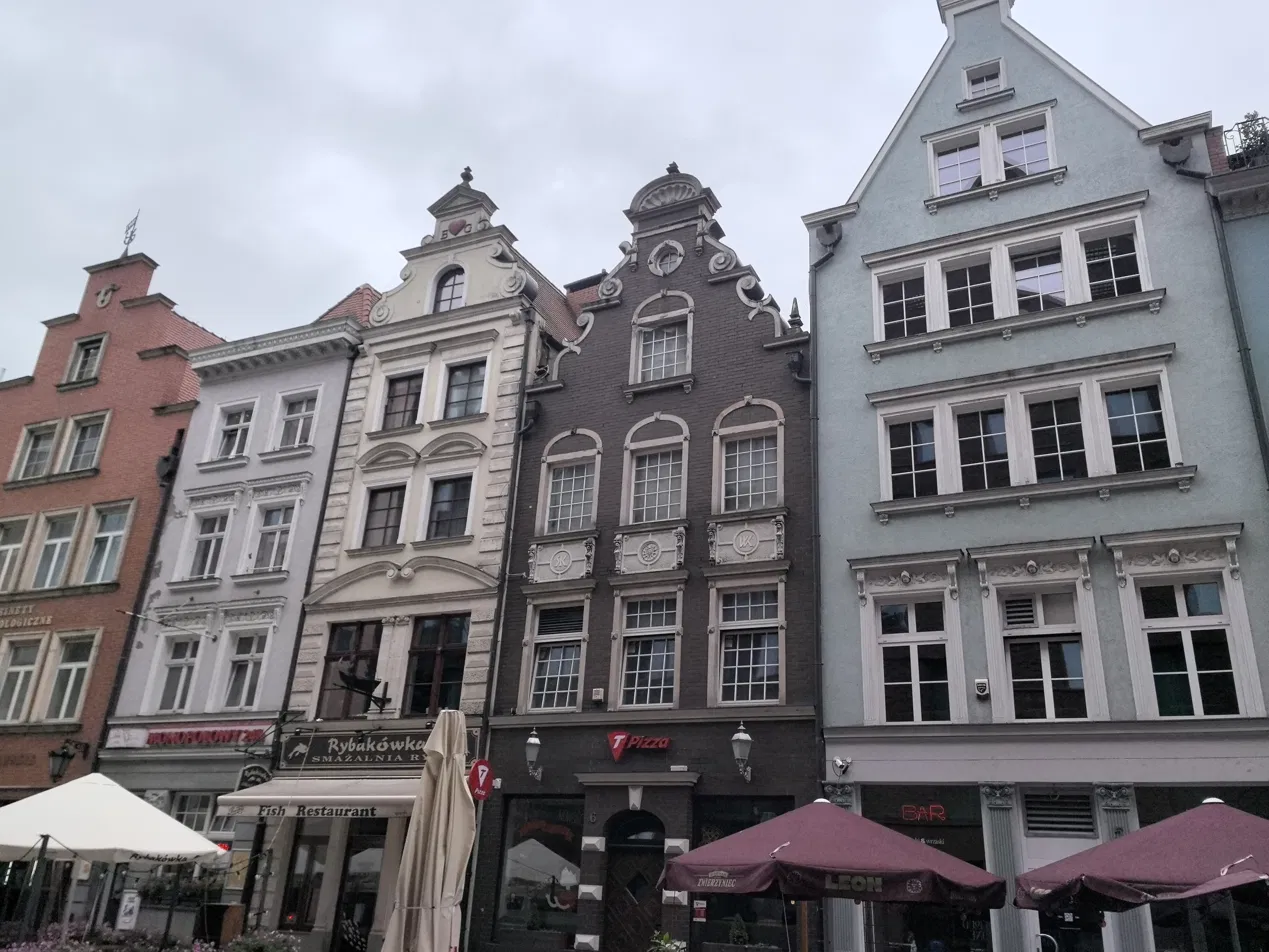
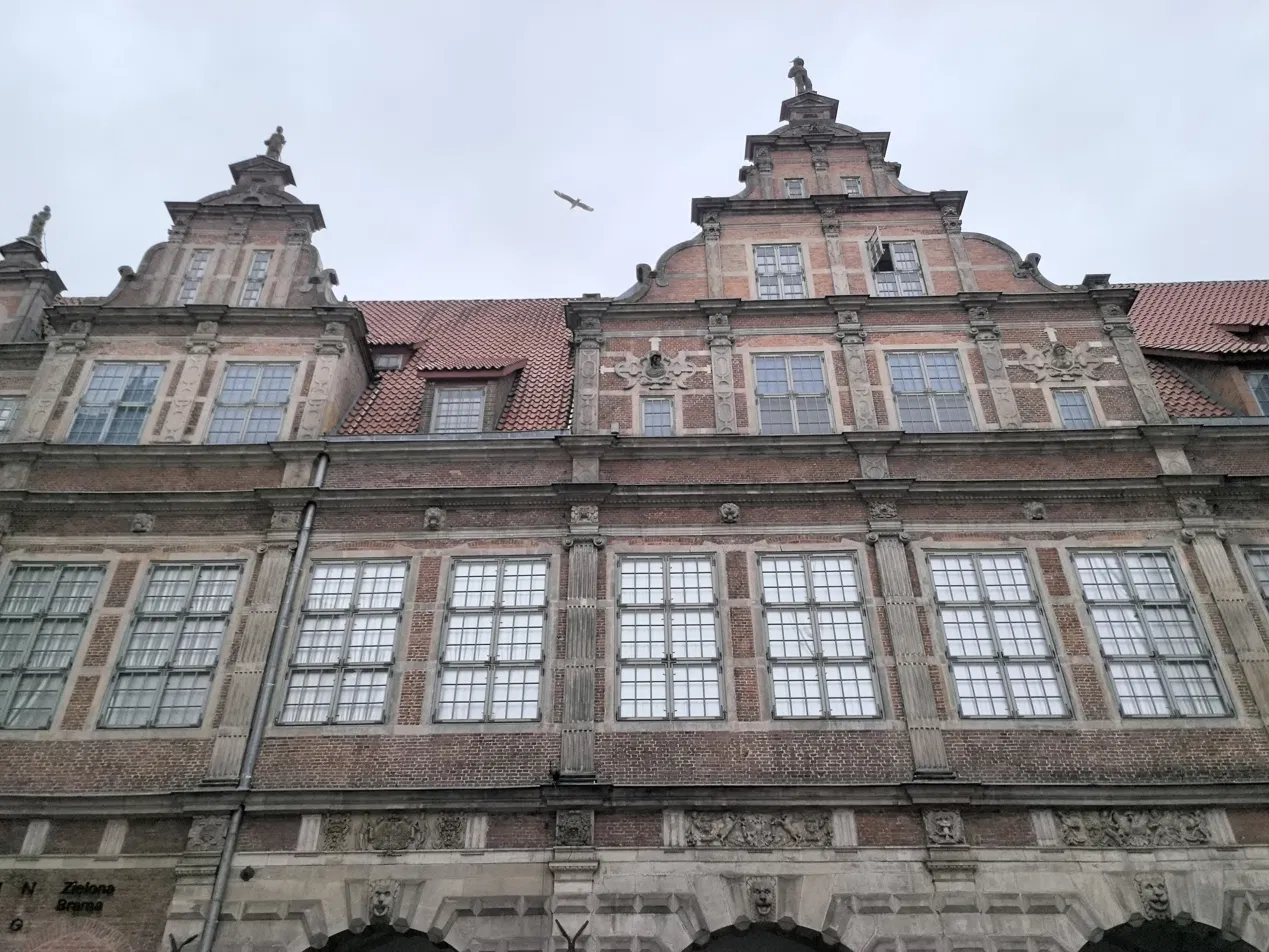
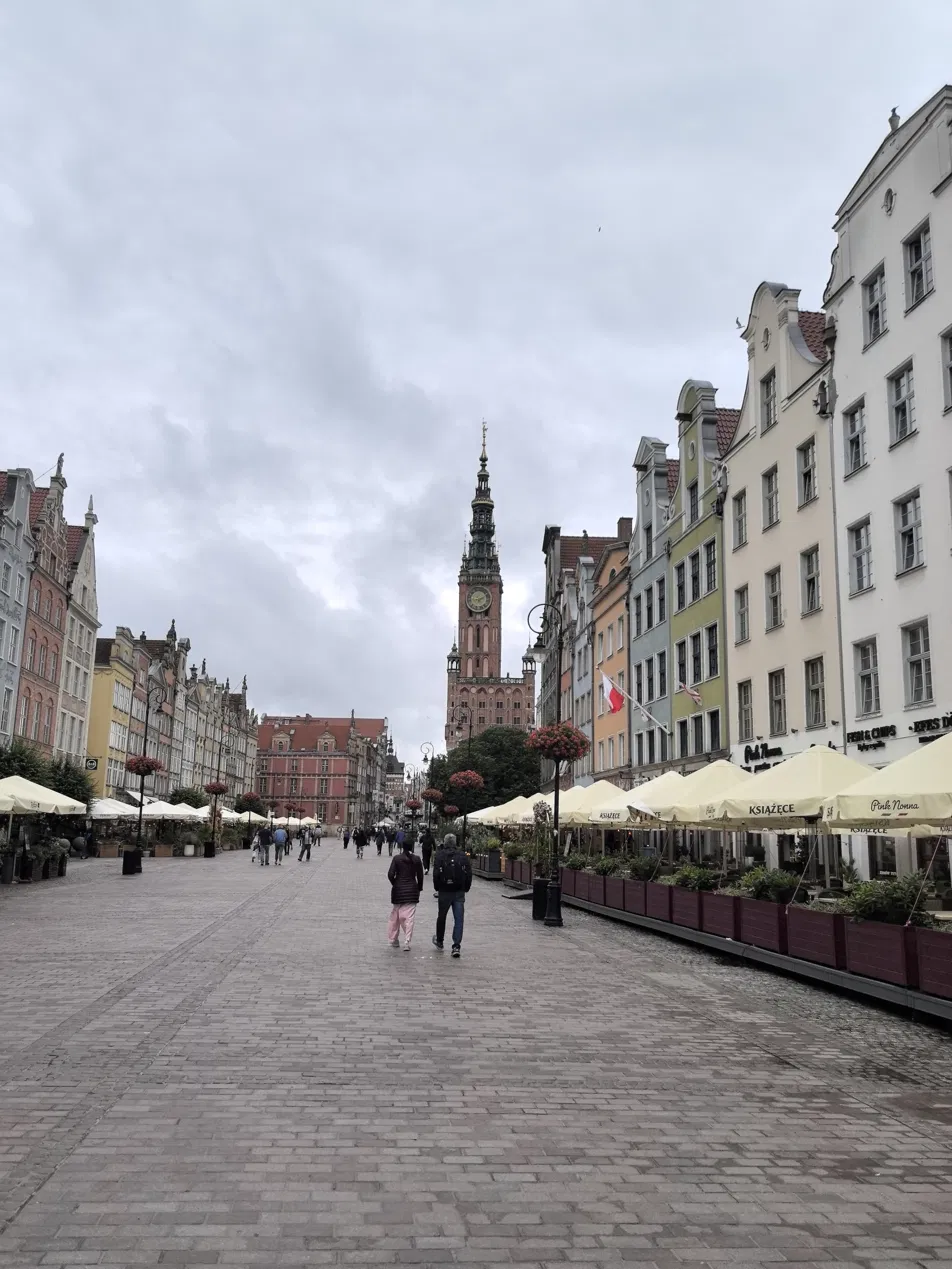
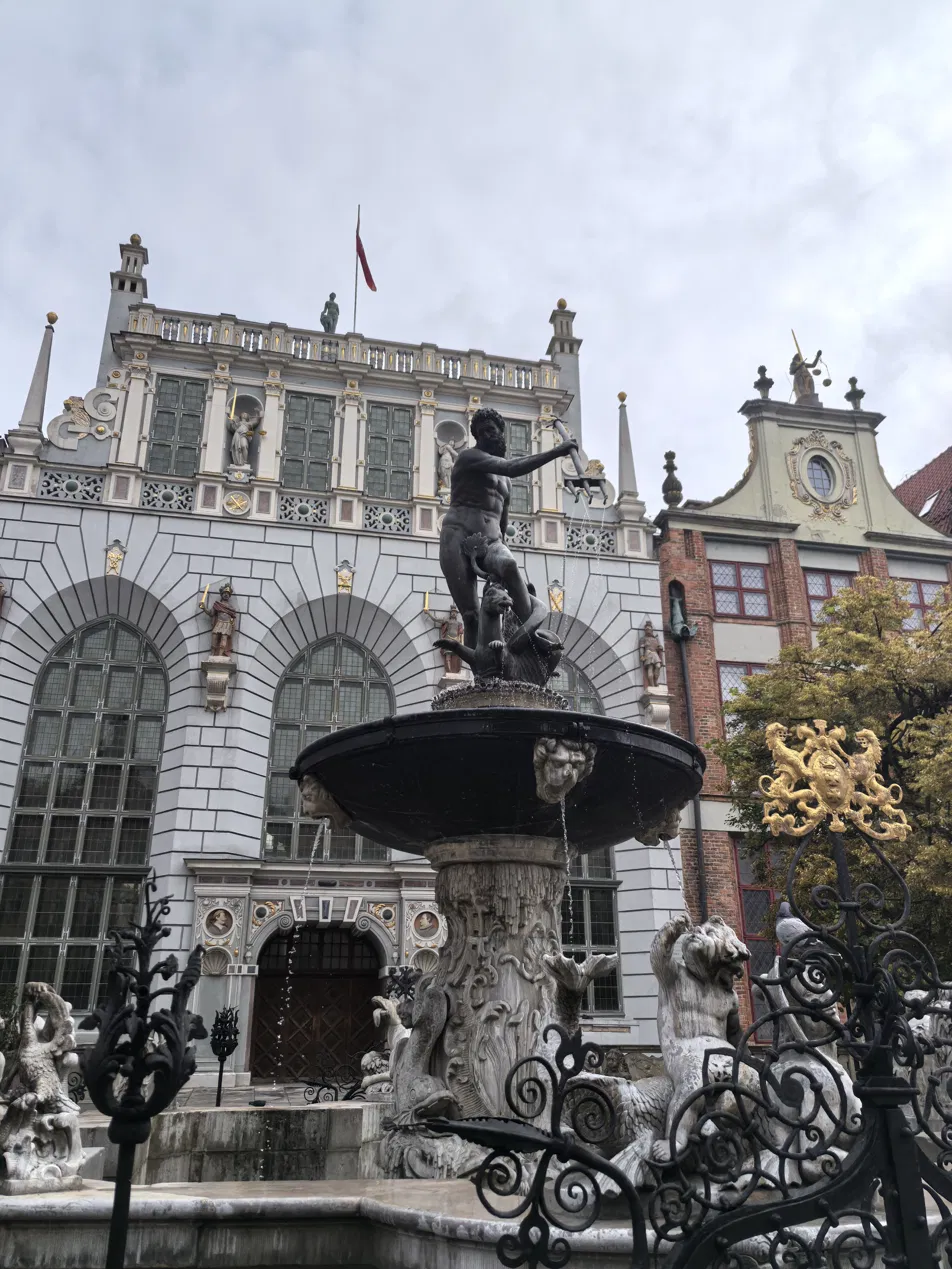
- What are Gdańsk old town's landmarks?The streets are lined with Dutch Mannerist Hanseatic gabled houses — taxed by street frontage, they were built tall and narrow, their gables crowded with scrolls and finials. Key buildings include the Green Gate (Zielona Brama, 1564–68, originally a royal residence), the ~80 m Main Town Hall (begun 1327, its tower topped with a golden statue of Sigismund II Augustus), and the city's emblem, Neptune's Fountain (cast 1615, switched on 1633, one of Poland's oldest secular monuments). The old town was almost wholly destroyed in 1945 and painstakingly rebuilt.
- What were Poland's golden age and decline?The 16th century (*Złoty Wiek*) was the peak of the Polish-Lithuanian Commonwealth: stretching from the Baltic nearly to the Black Sea, one of Europe's largest and most populous states, with an elective "noble democracy" and rare religious tolerance (Copernicus and the Vistula grain trade that made Gdańsk fabulously rich both belong to this era). The 17th century then turned sharply downward — endless wars (the "Deluge"), fiscal and political paralysis — setting the stage for the late-18th-century partitions.
- What is Prussia, and how is it tied to Poland and Germany?"Prussia" first meant the pagan Baltic Old Prussians east of Gdańsk; in the 13th century a Polish duke brought in the Teutonic Knights, who conquered and erased them and built their own order-state, which then turned on Poland and seized Danzig in 1308. After 1466 the region split into "Royal Prussia" (including Danzig) under the Polish crown and the Knights' eastern part; that eastern line later became the Kingdom of Prussia, ultimately forging the German Empire in 1871 through three wars of unification — only to be abolished outright and erased from the map after WWII.
- What became of Danzig/Gdańsk in WWII?After WWI the Treaty of Versailles made it the "Free City of Danzig," ~95% German, under League of Nations protection. WWII began right here — in September 1939 the battleship *Schleswig-Holstein* shelled Westerplatte, whose Polish garrison held out seven days to become a legend; the city was immediately annexed into the Reich. When Soviet forces took it in 1945 it was nearly destroyed; afterward its German population was expelled and it became thoroughly Polish Gdańsk (later the cradle of the Solidarity movement).
The Holy Roman Empire, the Migration Period & the Electors
Prompted by "Migration Period" and "Elector" placards in a Berlin museum (07-12)
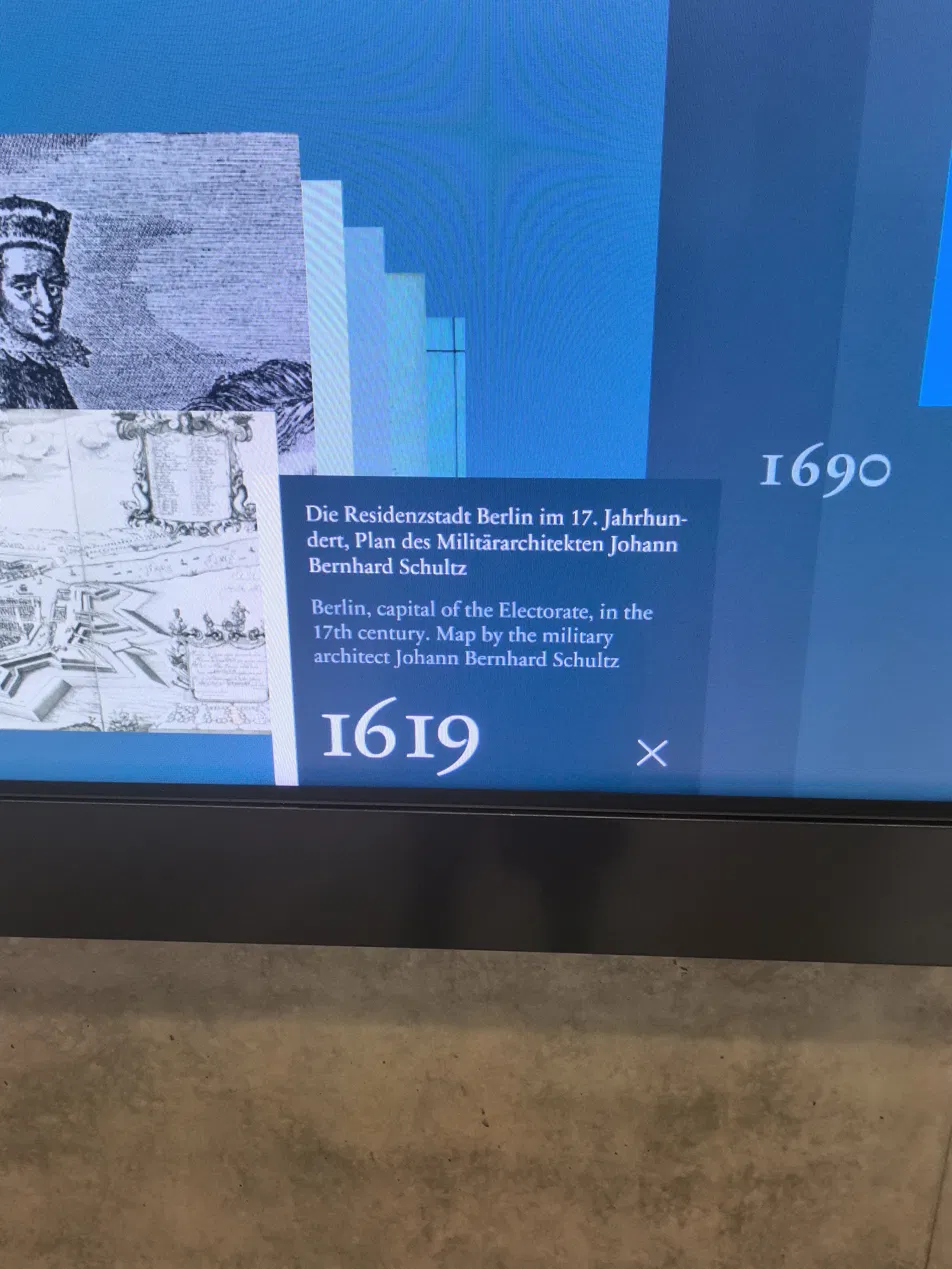
- What are an "Elector" and an "Electorate"?The Holy Roman Emperor was not hereditary but chosen by a handful of powerful princes with the right to vote — the "Electors" (German *Kurfürst*), and their territories were "Electorates." The placard's "Berlin, capital of the Electorate" means the Electorate of Brandenburg — Berlin was its residence-city (*Residenzstadt*); Brandenburg later became Prussia and then unified Germany, so Berlin stayed the capital throughout.
- Does the Holy Roman Empire belong to the Middle Ages?Partly. It ran from Charlemagne's coronation c. 800 (or Otto I in 962) to its dissolution by Napoleon in 1806, straddling the medieval and early-modern eras; it was never a unified state but a loose union of hundreds of principalities, within which Luther's 1517 Reformation and the 1618–48 Thirty Years' War both unfolded.
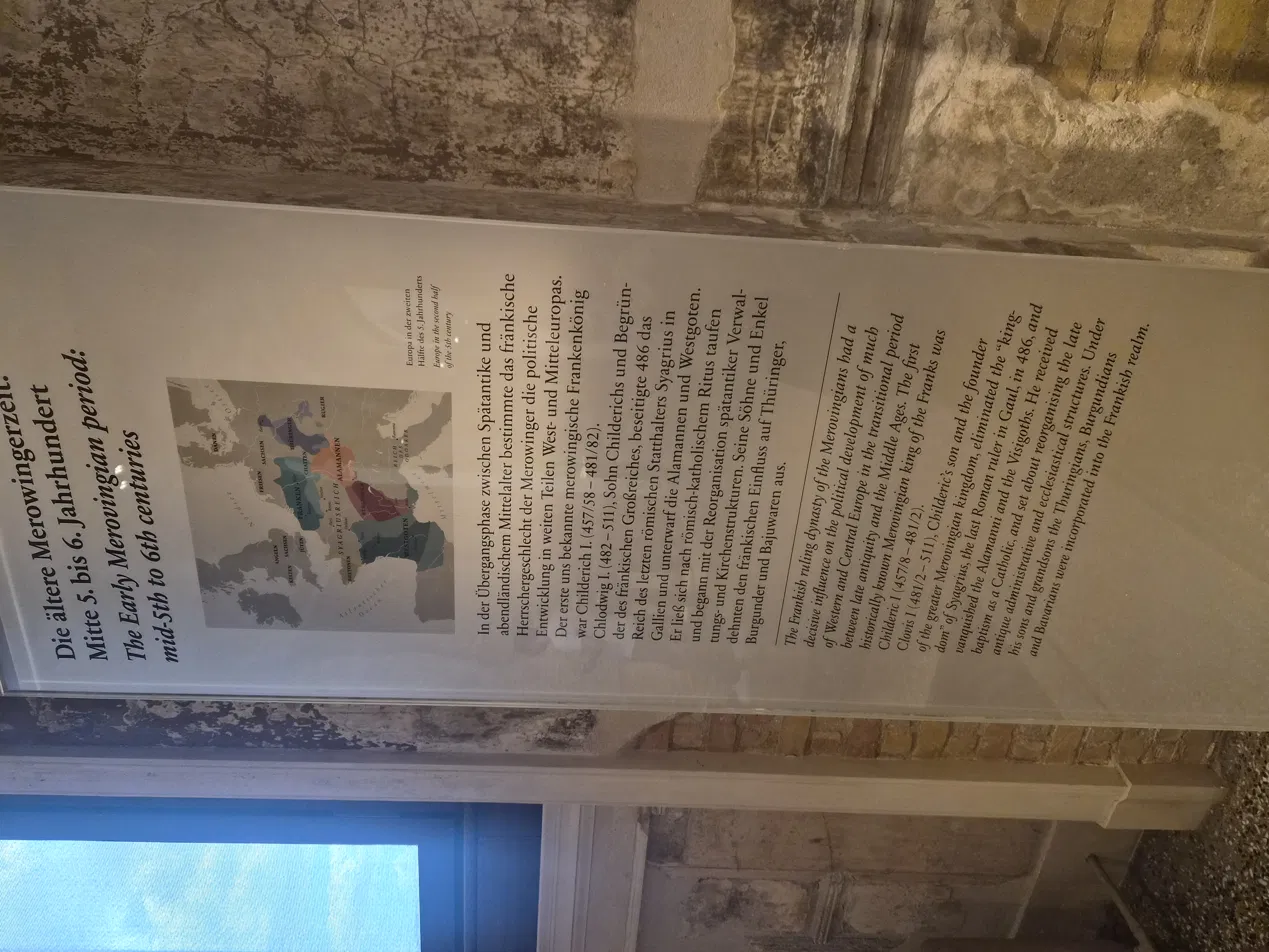
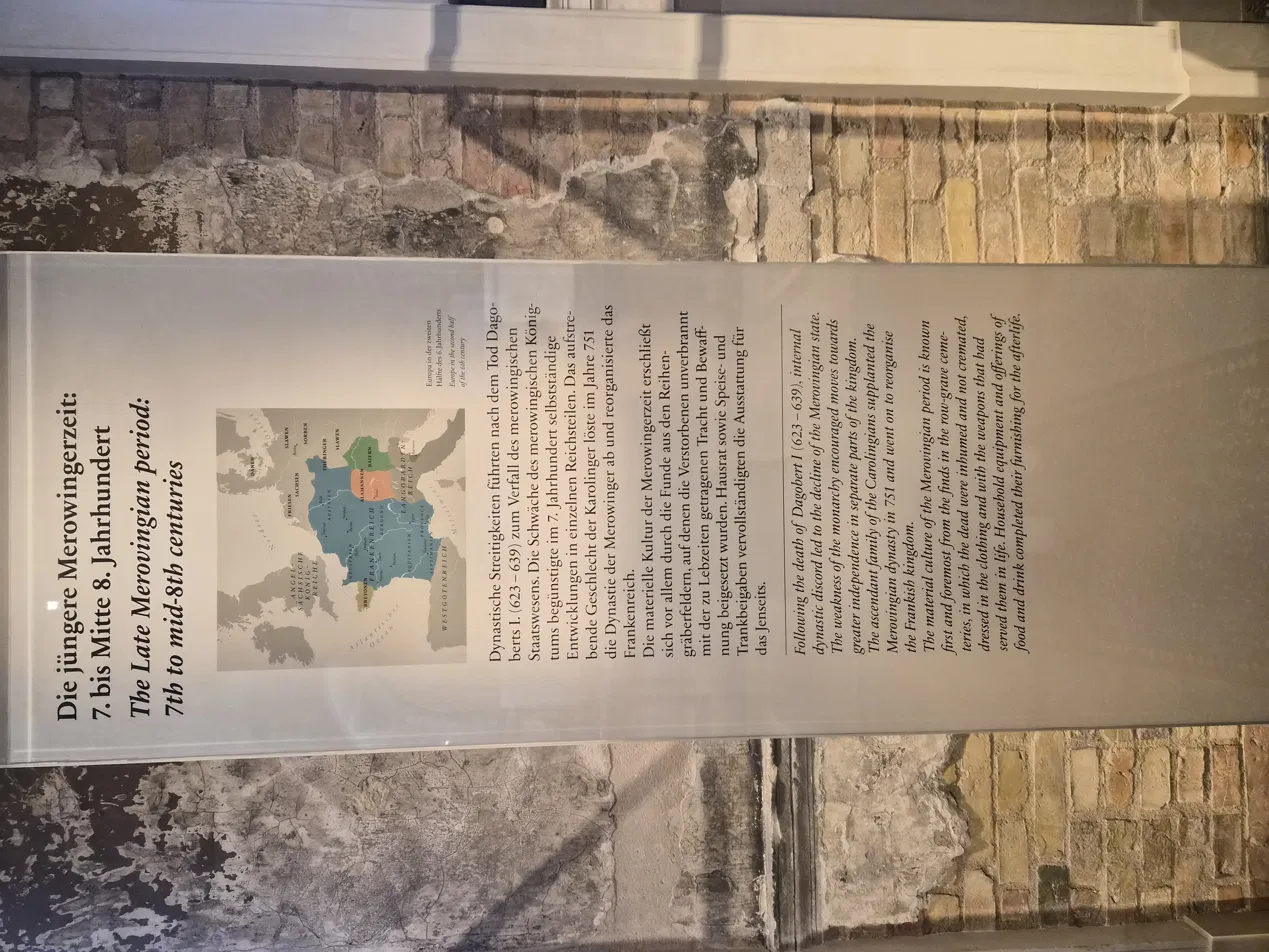
- What happened during the Migration Period?From c. 375–568, the mounted nomadic Huns burst into eastern Europe and pushed the Germanic tribes westward like dominoes: the Visigoths sacked Rome in 410 and ended up in Spain, the Vandals crossed Gaul and Spain to North Africa, the Anglo-Saxons entered Britain, the Franks founded a kingdom in Gaul in 486, and in 568 the Lombards entered Italy to close the era. These "barbarian kingdoms" arose on the crumbling territory of the Western Empire.
- Where did the Huns go?Under Attila, the "Scourge of God" (r. 434–453), they peaked, their empire stretching from the Central Asian steppe to the Rhine and forcing both Roman halves to pay tribute. But Attila died suddenly on his wedding night in 453, and within a year his realm collapsed amid infighting and the revolt of subject peoples — the Huns vanished as a people in under twenty years.
📷 5 of 7 shown
Medieval Berlin: town charters & city life
Prompted around Berlin's city museum and the Nikolaikirche (07-14)
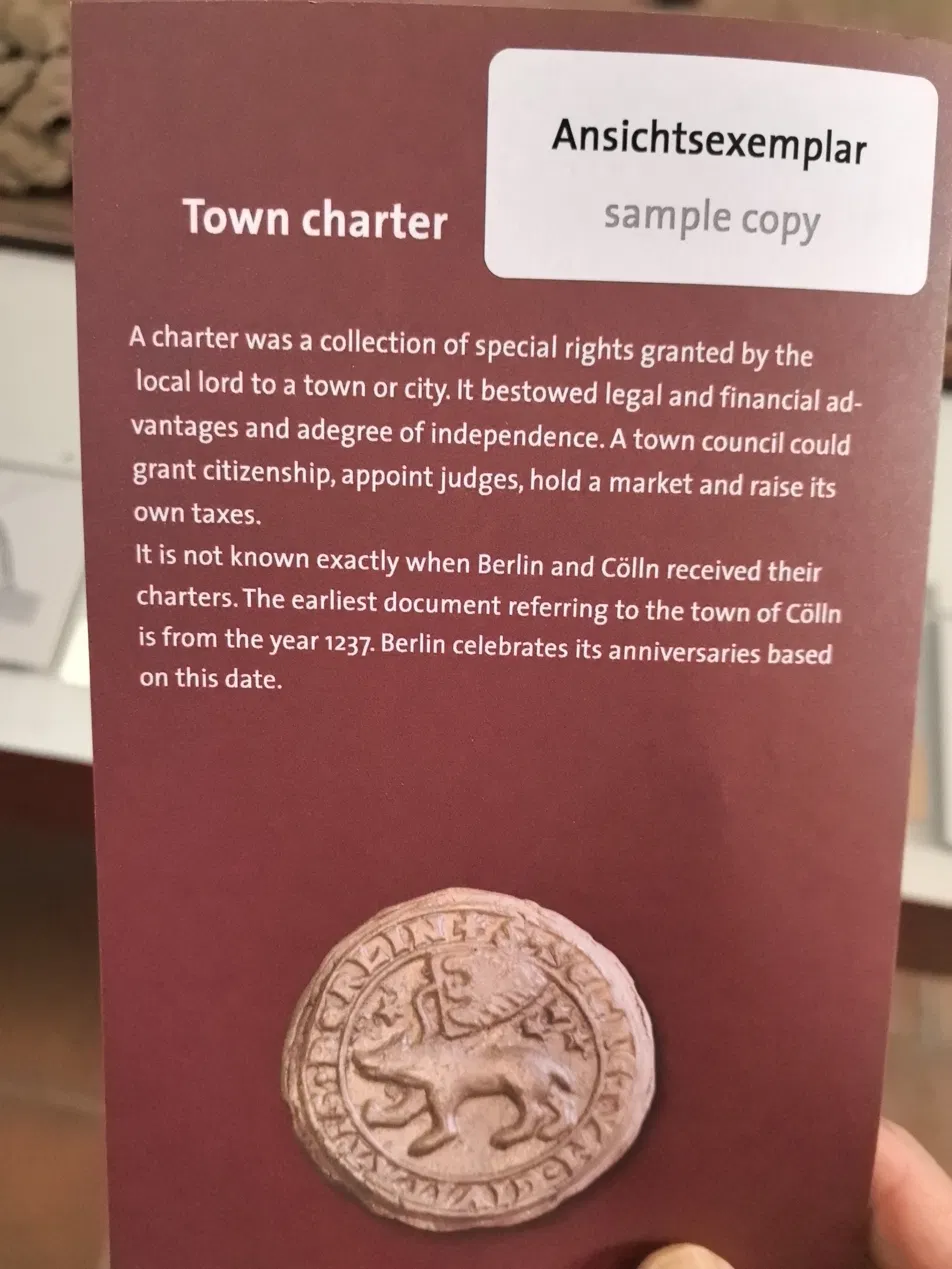
- What is a town "charter"?A bundle of privileges a medieval lord granted a town: a degree of legal and fiscal self-government, the right to grant citizenship, to appoint its own judges and courts, to hold markets (a major economic privilege), and to levy its own taxes. It gave towns semi-independent status and was the institutional foundation of the rise of medieval cities.
- How did medieval Berlin punish criminals?There was almost no imprisonment; punishment worked mainly through public humiliation — because "respectability/reputation" was a prerequisite for citizenship, a ruined name meant social death. Common methods included the pillory (locking a person in a neck-and-hand frame to be shamed in public).
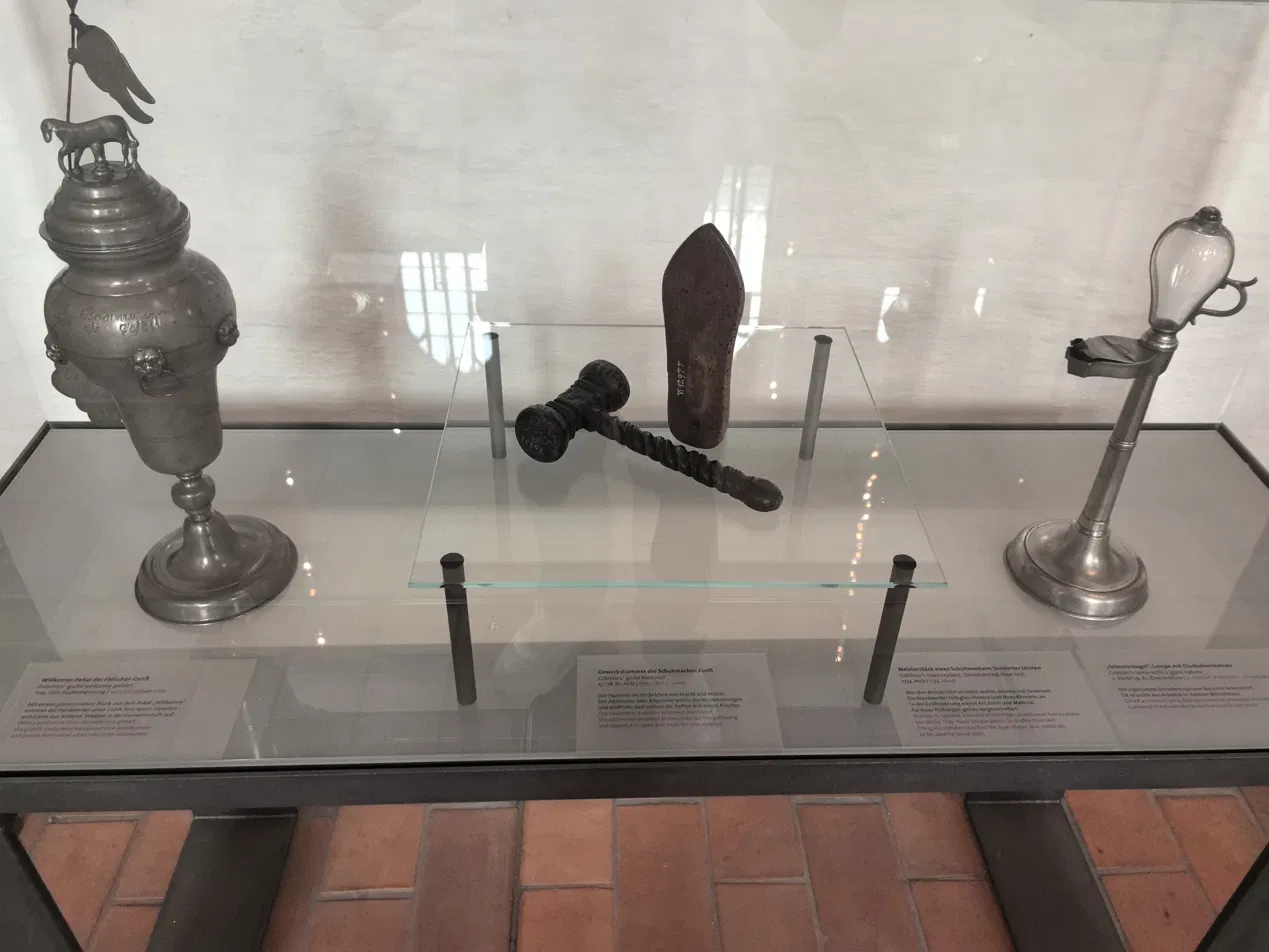
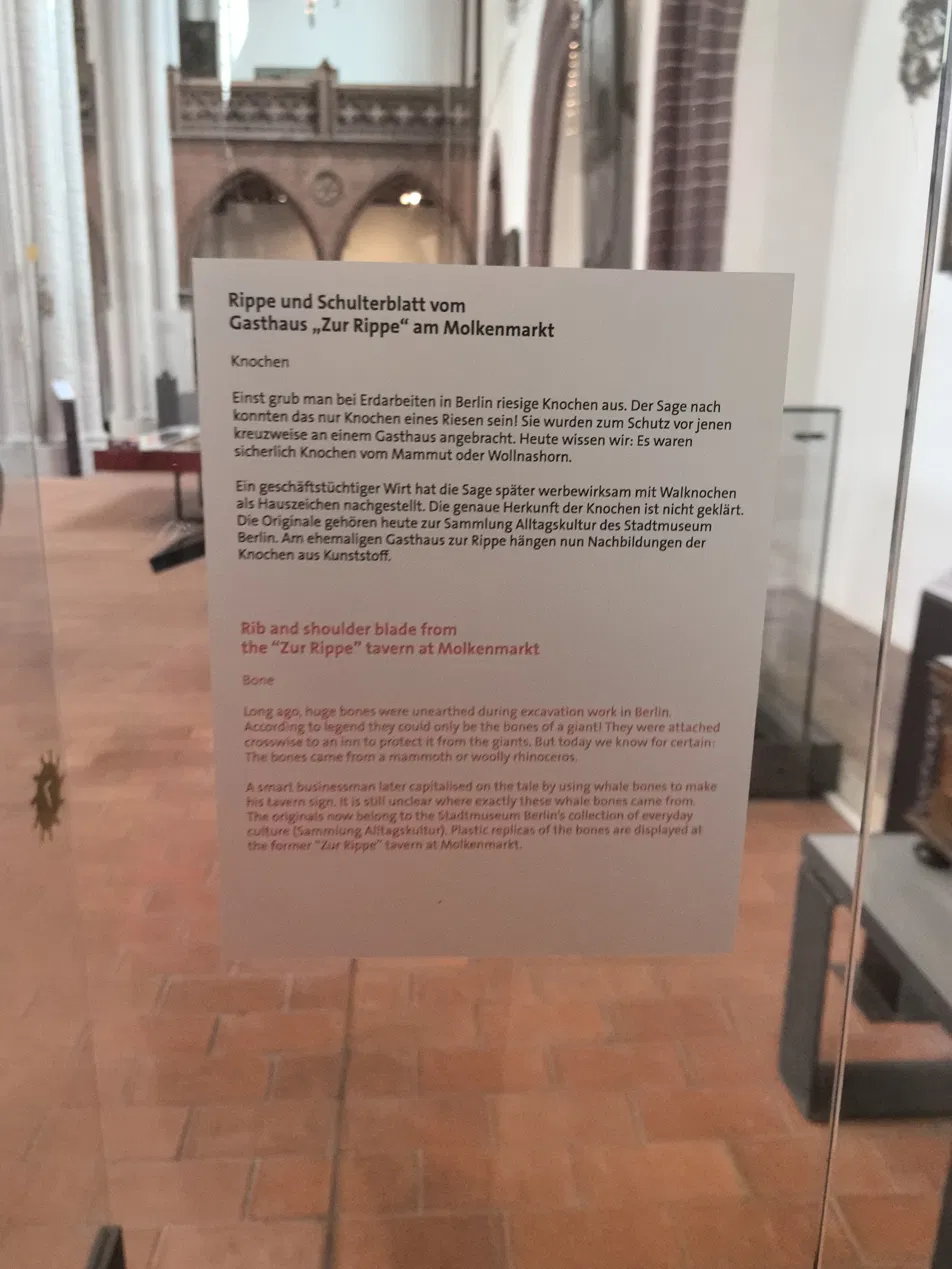
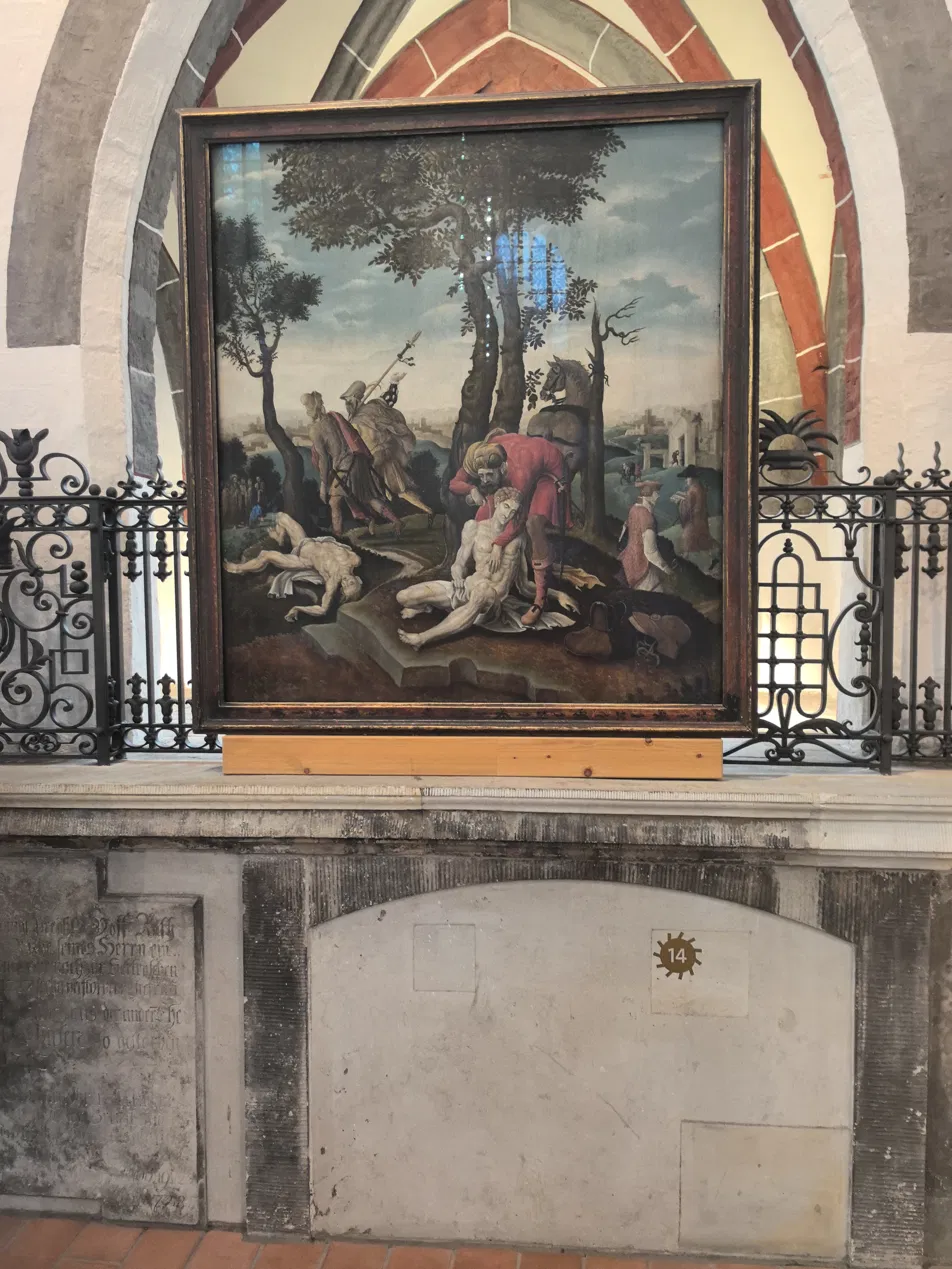
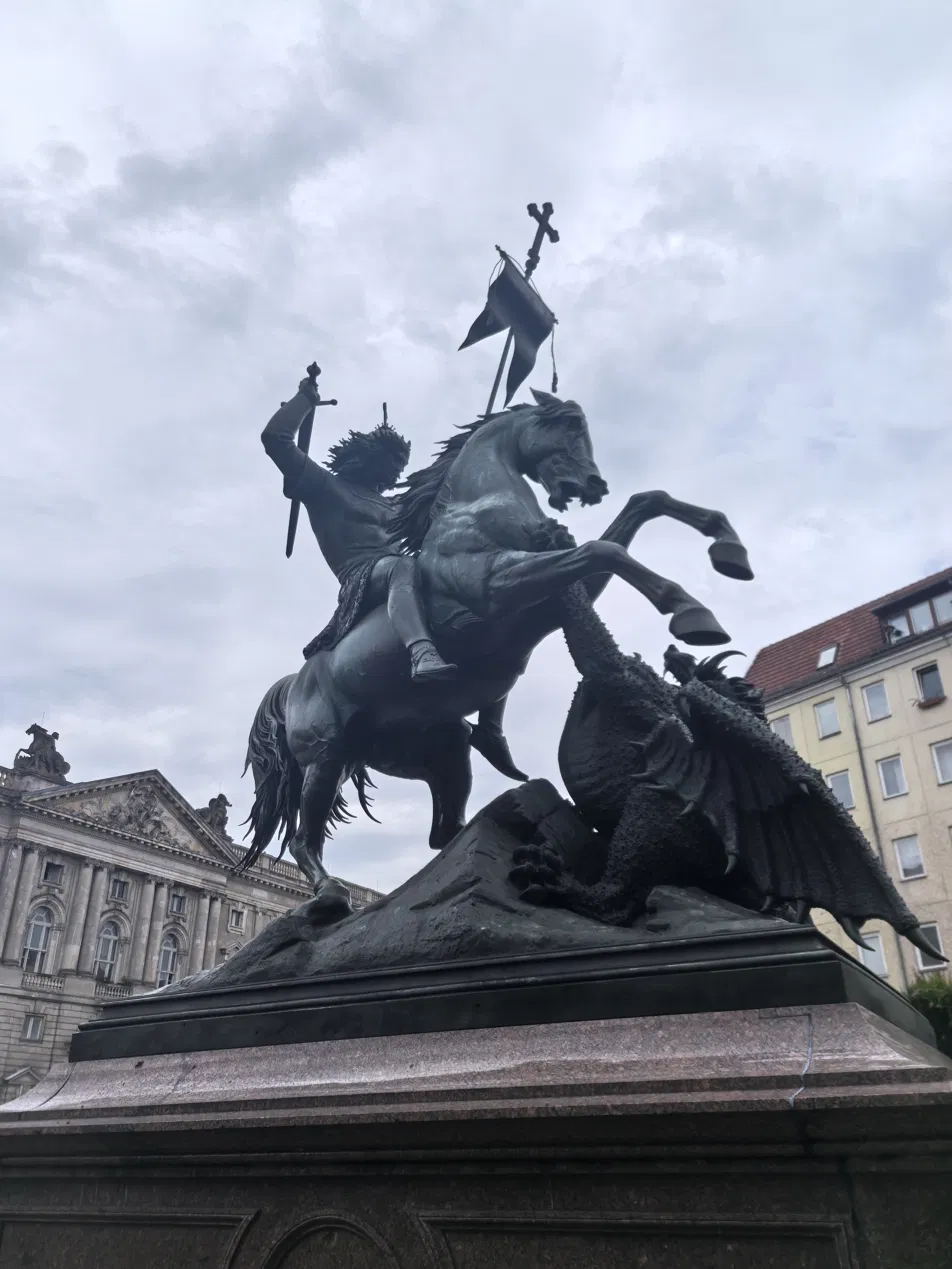
- What other traces of city life remain?Crafts were controlled by guilds (*Zunft*), which governed entry and standards; churches held the "king of instruments," the pipe organ, along with Baroque tomb monuments (like one for a court physician) and a statue of St. George slaying the dragon by the Nikolaikirche; folk tales circulated too, like the "Rib Inn" (Zur Rippe), said to be named for giant bones dug up during construction.
📷 5 of 11 shown
III · Modern Germany
The rise and abolition of Prussia
Prompted at Berlin's Victory Column (07-14)
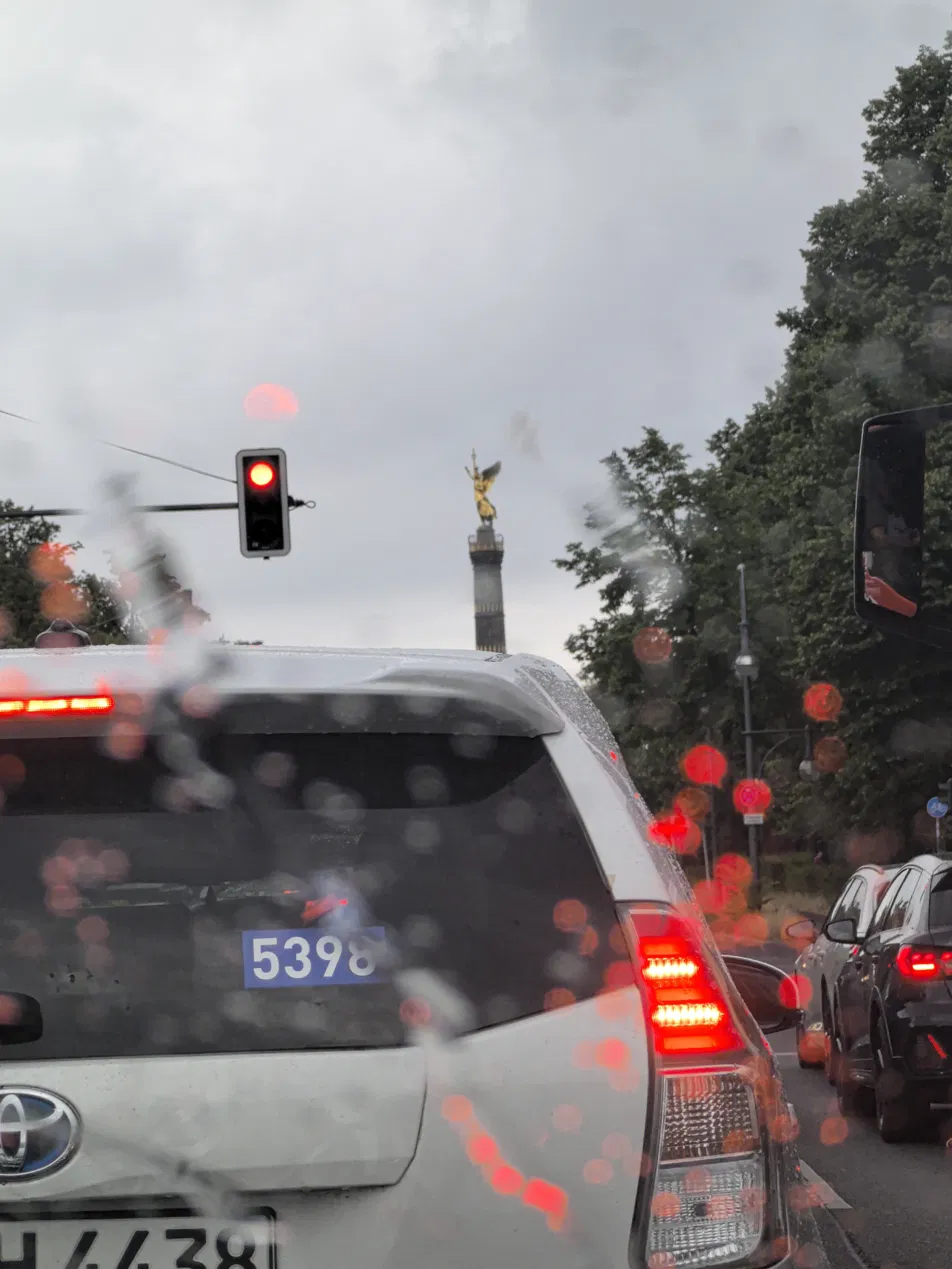
- How did Prussia forge a unified Germany?Brandenburg-Prussia (the House of Hohenzollern) rose to great-power status in the 18th century through military strength and reform, and in the 19th, under Chancellor Bismarck, fought three "wars of unification" (against Denmark, Austria and France), founding the German Empire in 1871 after defeating France — Kaiser Wilhelm I was even crowned at Versailles, a humiliation for France that sowed the seed of the later fight over Alsace-Lorraine. Berlin's Victory Column (Siegessäule, topped by the golden goddess "Goldelse") was raised to mark these victories.
- How was Prussia related to Austria and to Poland?Prussia (Hohenzollern) and Austria (Habsburg) long contended for leadership of the German world; the 19th-century unification debate pitted a "Greater Germany" (including Austria) against a "Lesser Germany" (led by Prussia, excluding Austria), and the Lesser German solution won. Toward Poland, Prussia joined Russia and Austria in the three partitions of 1772–1795 that erased Poland for over a century.
- Why did Prussia ultimately disappear?After WWII the victors judged Prussia the seedbed of German militarism and authoritarianism; in 1947 the Allied Control Council formally abolished the state of Prussia, its territory was partitioned with large eastern parts given to Poland and the USSR, and the very name was wiped from the map.
The Nazi rise to power & WWII
Prompted by memorials along the Berlin Wall route — the Topography of Terror, the Memorial to the Murdered Jews, and others (07-13)
- How did the Nazis come to power?Largely by a "legal seizure": exploiting Weimar's ballot box, the Nazi vote surged from ~2.6% in 1928 to first party in 1932, and in 1933 Hitler was appointed chancellor through the scheming of conservatives like von Papen, then dismantled democracy from within via the Reichstag Fire and more. The soil was popular resentment after WWI defeat, the humiliation of Versailles and economic collapse.
- Why did WWI and WWII happen?WWI (1914) grew from the structural rivalries of the late 19th century — great-power competition, colonial rivalry, arms races and alliance systems, the "powder kegs"; WWII was in large part the unresolved aftermath of WWI: the punitive reparations and humiliation of Versailles and the economic disaster of the Depression pushed Germany toward Nazism and revanchism.
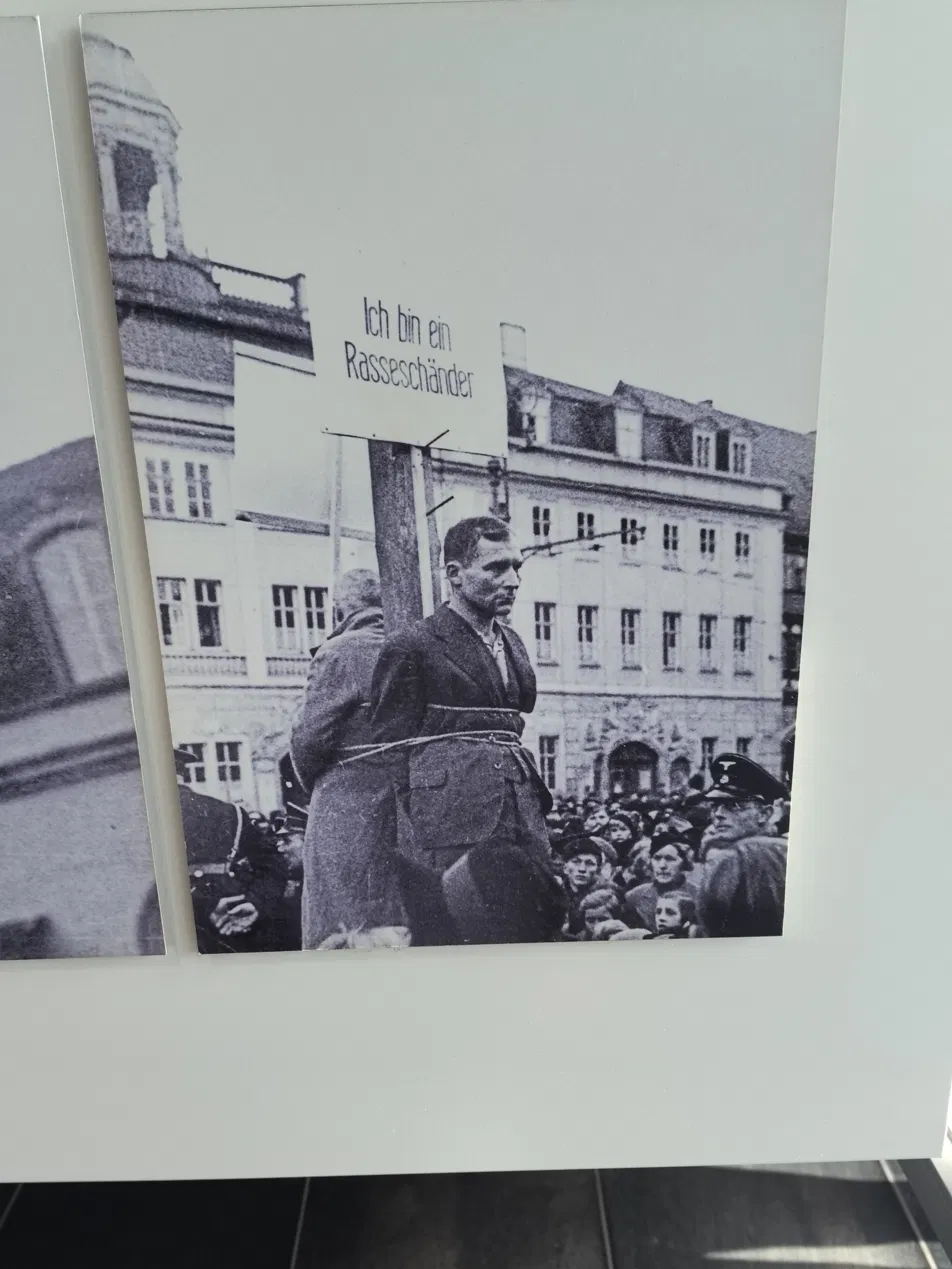
- What were antisemitism and the Holocaust about?Antisemitism in Europe has a nearly two-thousand-year history (the religious "Christ-killer" charge, medieval segregation and expulsions, and more); the Nazis only pushed it to its most systematic, industrialized, genocidal extreme. Among occupied lands the Netherlands had the highest Jewish death rate in western Europe (~73%), France and Belgium lower; the catastrophe also directly gave rise to the founding of Israel in 1948.
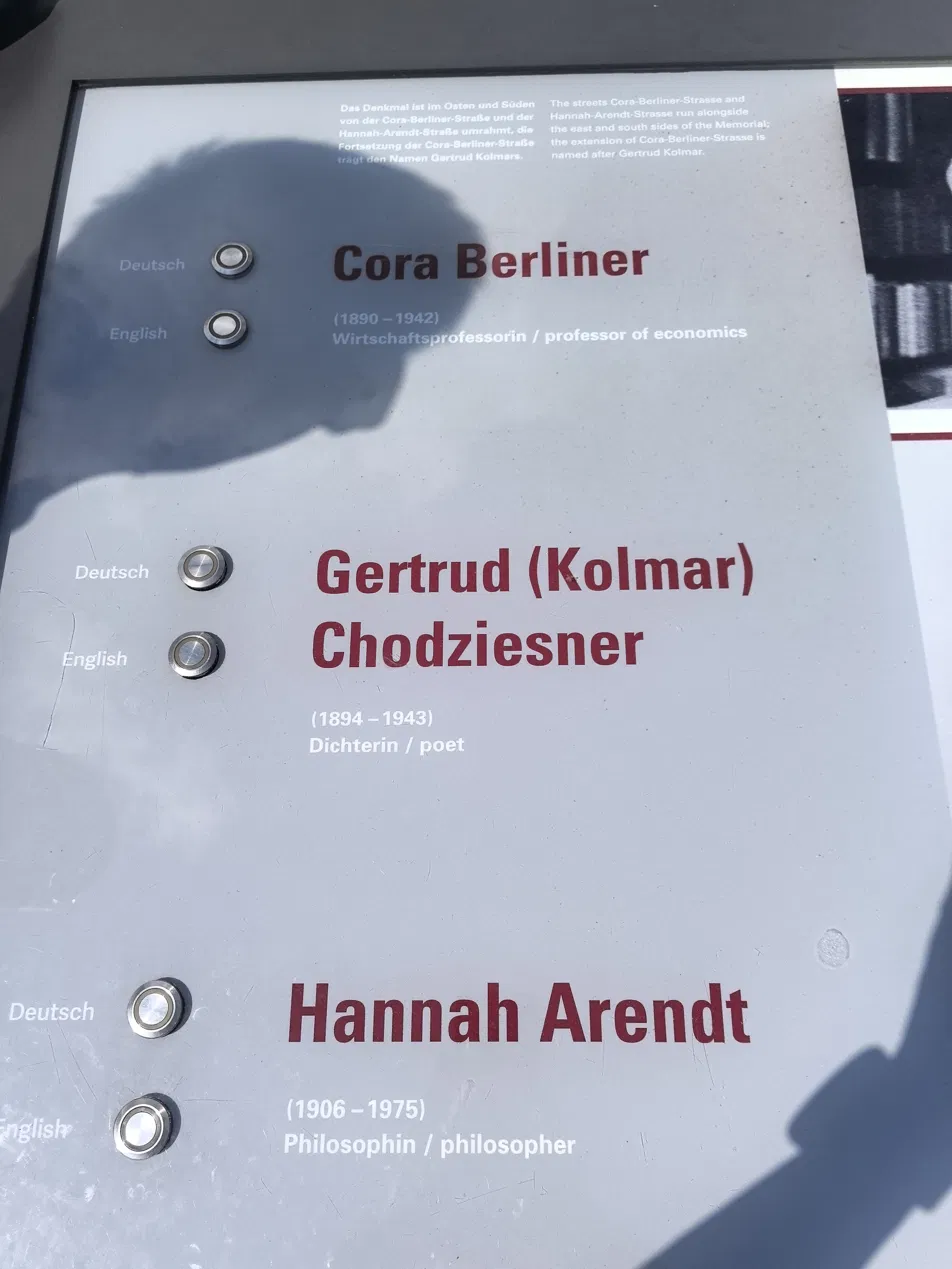
- How has postwar Germany faced this history?Germans call it *Vergangenheitsbewältigung* ("working through the past"), a whole system woven into law, education and public space: the 1949 Basic Law gave democracy "anti-suicide" safeguards (like the ability to ban anti-constitutional parties), and memorials and "stumbling stones" are set into the most visible parts of the city so every generation confronts rather than hides this past.
The Cold War, a divided Germany & the Berlin Wall
Prompted by the Berlin TV Tower, a Fischerinsel placard, and walking the Berlin Wall on the ground (07-12, 07-13)
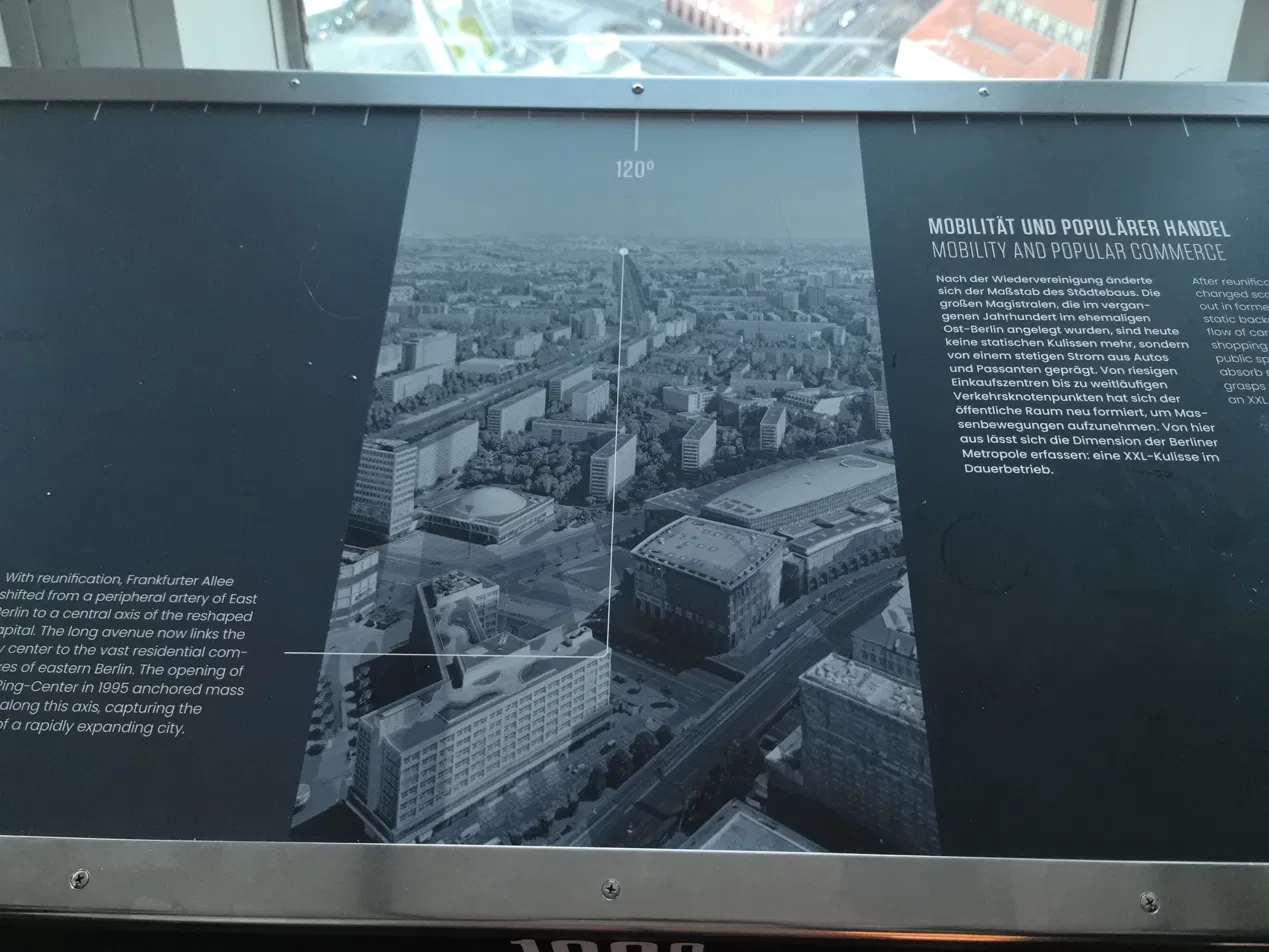
- Why were Berlin and Germany divided?Two layers of division stacked up: after WWII the US, UK, France and USSR occupied Germany in zones (split in 1949 into West Germany/FRG and East Germany/GDR), and though the capital Berlin lay deep inside the Soviet zone it too was quartered — producing the island of "West Berlin" surrounded by the GDR. Berlin's centuries-old historic core (the Brandenburg Gate, Unter den Linden, Museum Island, the TV Tower area) all fell on the East Berlin side.
- What was life like in East and West Berlin during the Cold War?One nation, two worlds: West Berlin, in the Western camp, was prosperous and free yet an "island" surrounded by the GDR, its residents leaving town only via GDR "transit corridors" under surveillance; East Berlin was the GDR capital. Amid the contrast lay the absurd — the hundreds of thousands of Soviet troops in the GDR were essentially paid for by the East Germans themselves.
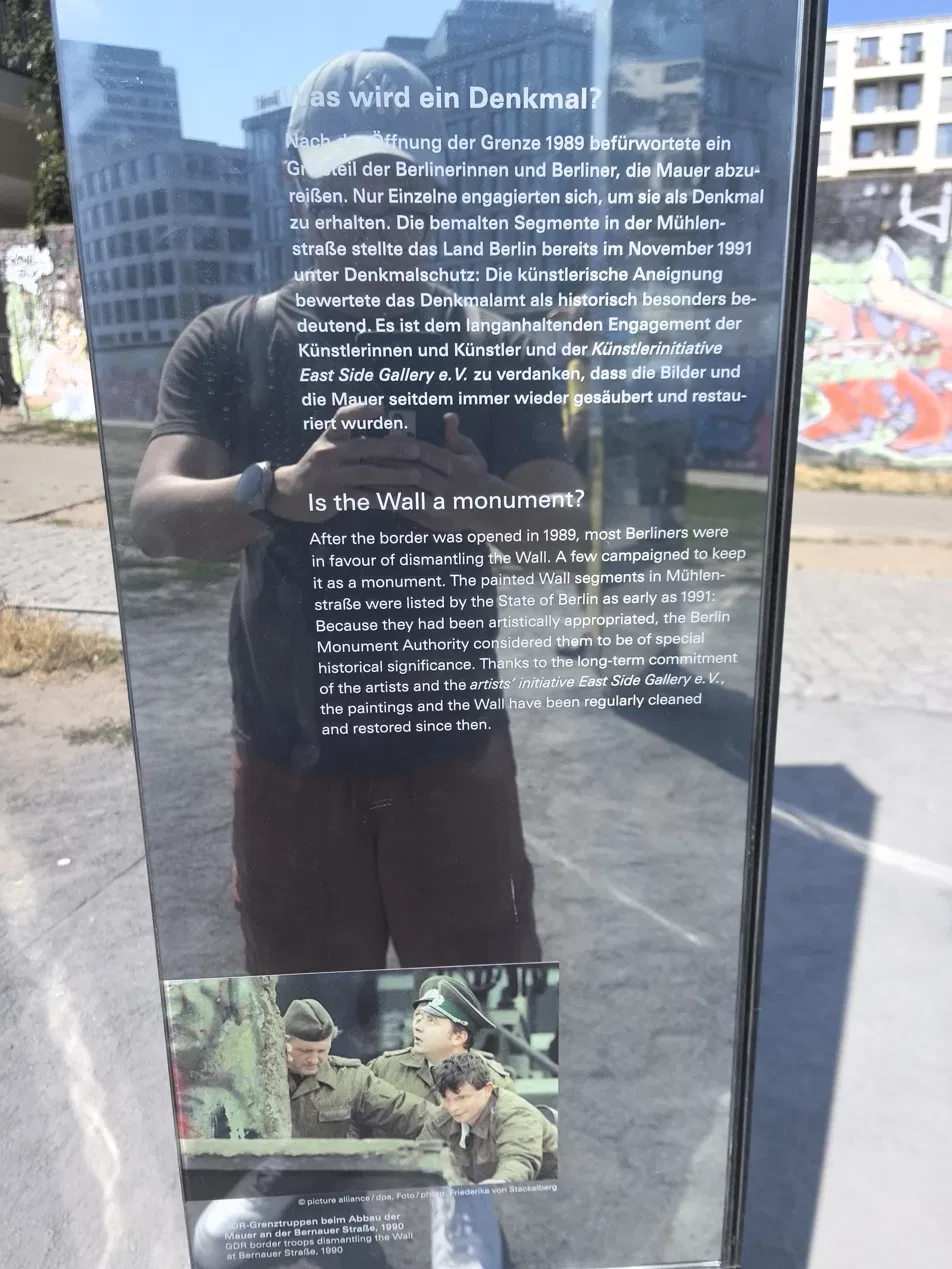
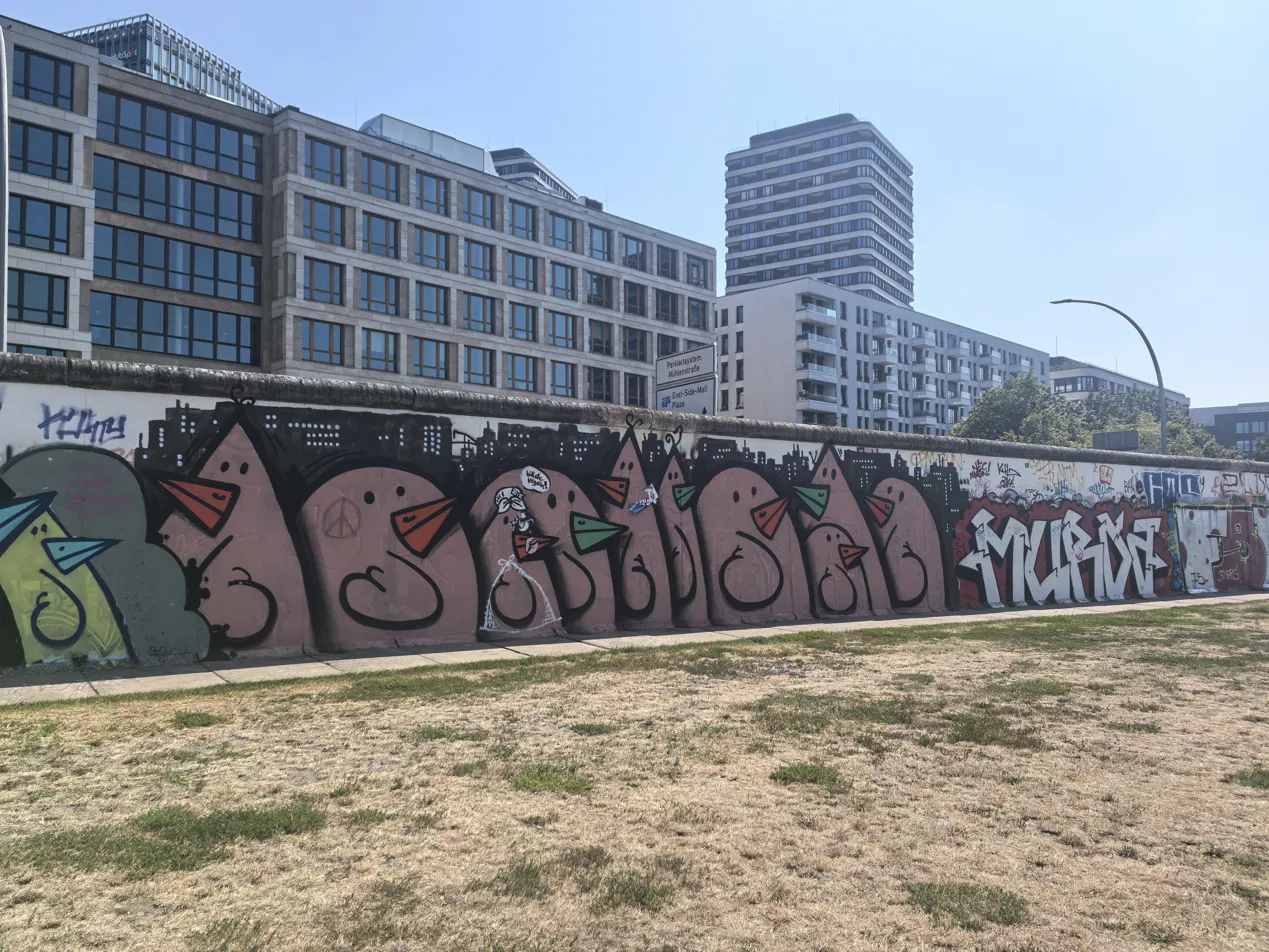
- How was the Berlin Wall built, and how did it fall?To stop the flood of East Germans escaping west through Berlin, the Wall went up overnight in 1961 under Khrushchev. It stood 28 years and fell dramatically on 9 November 1989 amid the upheavals across Eastern Europe, the GDR's "Monday demonstrations" and a mistakenly announced opening; the two Germanys reunified the next year.
- What does the "Fraternal Kiss" mural depict?On the East Side Gallery, the mural of Soviet leader Brezhnev and East German leader Honecker kissing on the mouth (full title *My God, Help Me to Survive This Deadly Love*) is based on a real 1979 news photo from the GDR's 30th-anniversary celebrations — such a "socialist fraternal kiss" was a formal greeting between bloc leaders.
📷 5 of 19 shown
Berlin's landmarks & churches
Prompted around Museum Island and central Berlin (07-11, 07-12)
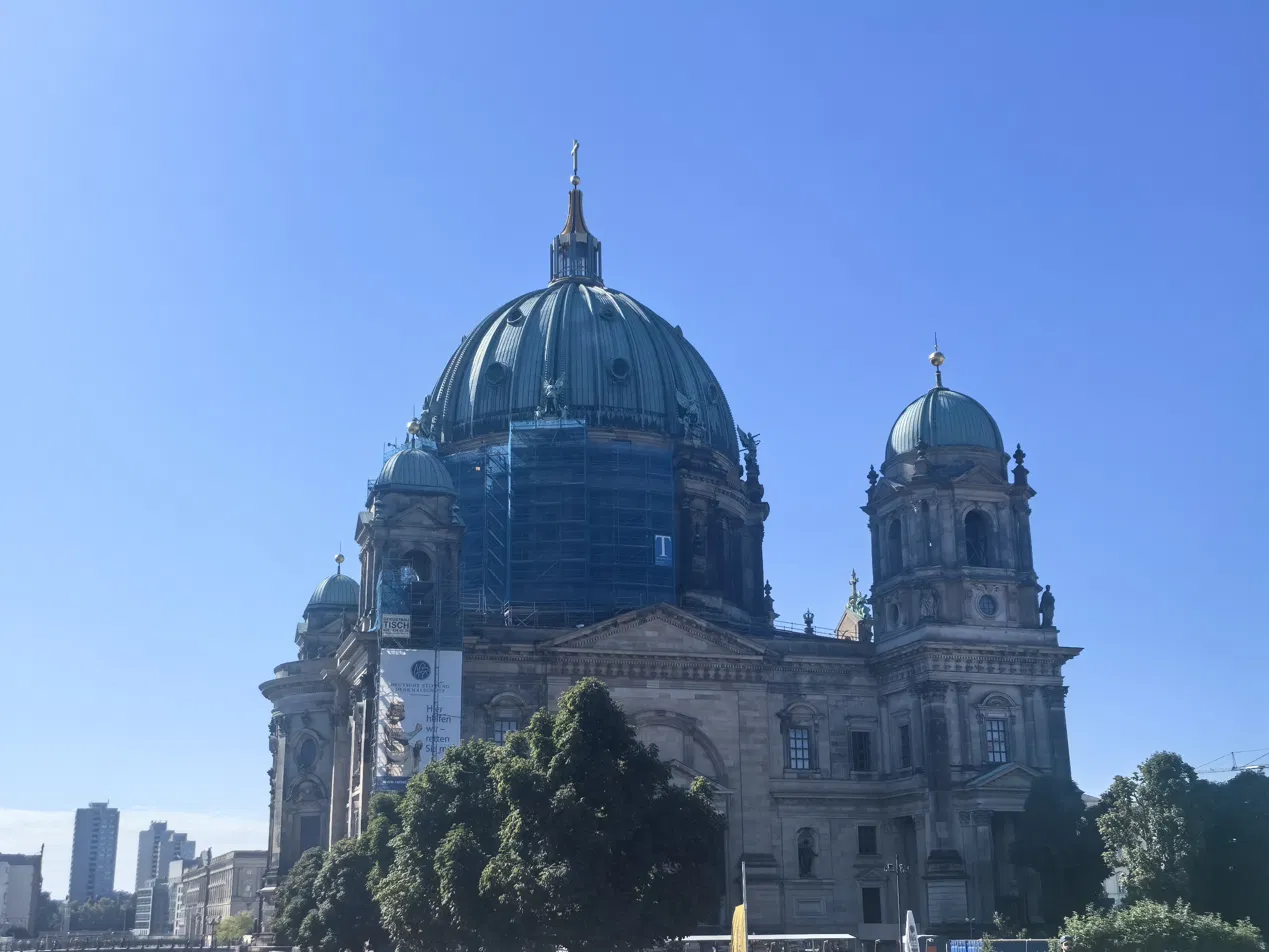
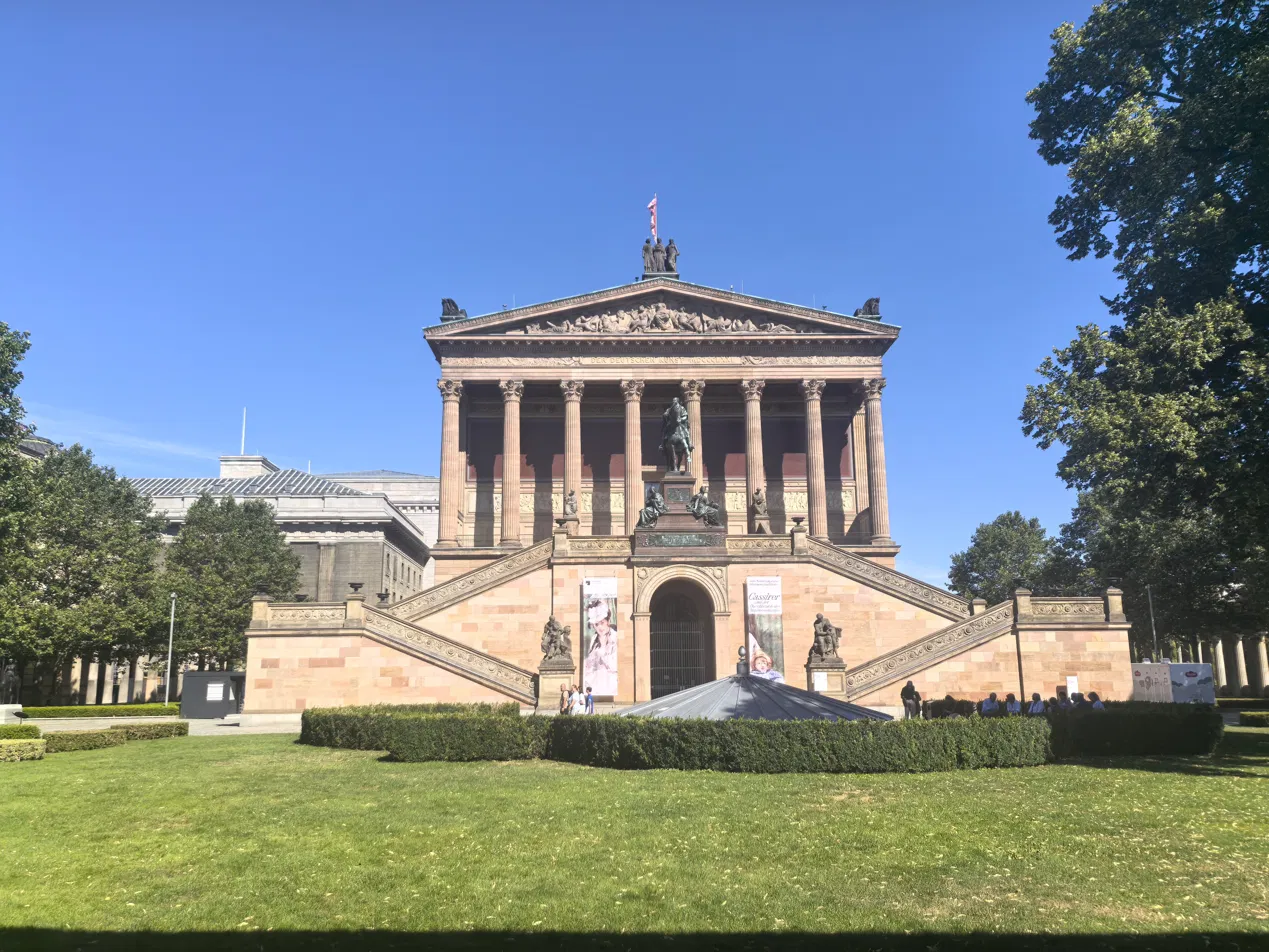
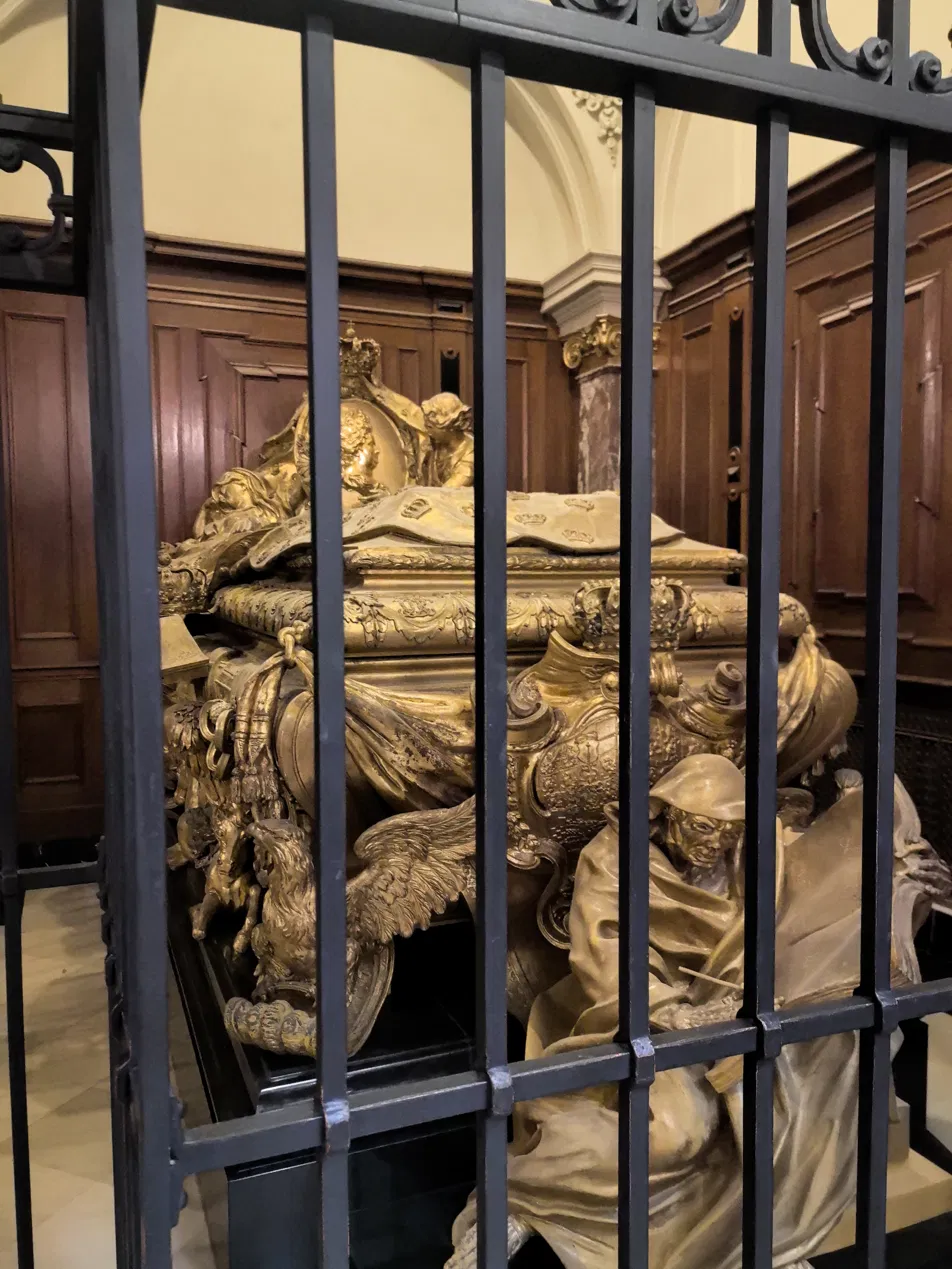
- What is the story of Berlin Cathedral?It stands on Museum Island beside the Spree, rebuilt in 1894–1905 by order of Wilhelm II in Renaissance- and Baroque-revival style, its green copper dome ~98 m tall. Once the court church of the House of Hohenzollern, its crypt holds about 90 members of the Prussian royal family; restoration after WWII damage went on for decades.
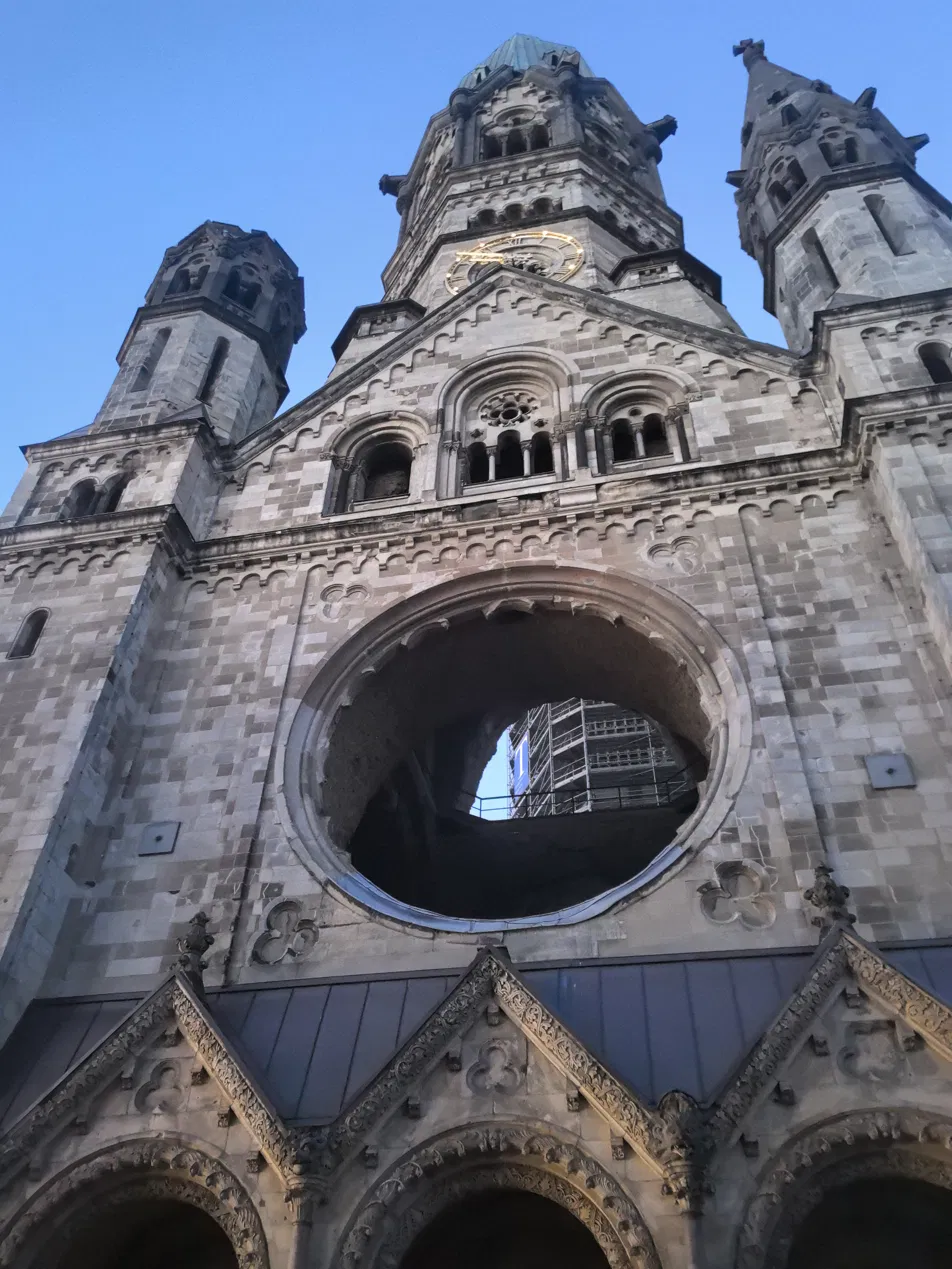
- Why is the Kaiser Wilhelm Memorial Church a ruin?This 1890s neo-Romanesque church was badly damaged in a 1943 Allied air raid. Postwar Berliners neither rebuilt nor demolished it but deliberately kept the broken tower and façade as an anti-war memorial to warn later generations; locals nicknamed it "the hollow tooth" (der hohle Zahn).
- What's the story of the Brandenburg Gate and Unter den Linden?The Brandenburg Gate was designed in 1788–1791 by Langhans; the Quadriga atop it, by Schadow, was carried off to Paris by Napoleon as loot and later brought back — the goddess, originally "Peace," was recast on her return as Victory with an iron cross and eagle. The avenue before it, Unter den Linden, literally means "under the lindens" — German *Linde* is the linden/lime tree, not the Buddhist bodhi tree, so the common Chinese name "Bodhi-tree Avenue" is a long-standing mistranslation.
Kant & German philosophy
Prompted by a philosophical ramble that grew out of Königsberg (07-14)
- What has become of Kant's hometown?Kant was born in 1724 in Königsberg, Prussia, scarcely ever left, and died and was buried there in 1804, when it was a major Prussian city and coronation seat. After WWII the city was assigned to the USSR, its German population expelled and it renamed Kaliningrad — today a Russian exclave wedged between Poland and Lithuania, utterly transformed in both belonging and appearance.
- What is the lineage of German thinkers, and what does "God is dead" mean?Germany has a deep philosophical tradition running from Kant (critical philosophy) through Hegel, Schopenhauer, to Nietzsche and on to Heidegger in the 20th century. Nietzsche's "God is dead" does not mean a deity literally died, nor is it a simple atheist boast, but a diagnosis of Western civilization: the framework of absolute, transcendent value and meaning represented by the Christian God has lost its credibility after science and the Enlightenment.
German cities & the lost eastern homelands
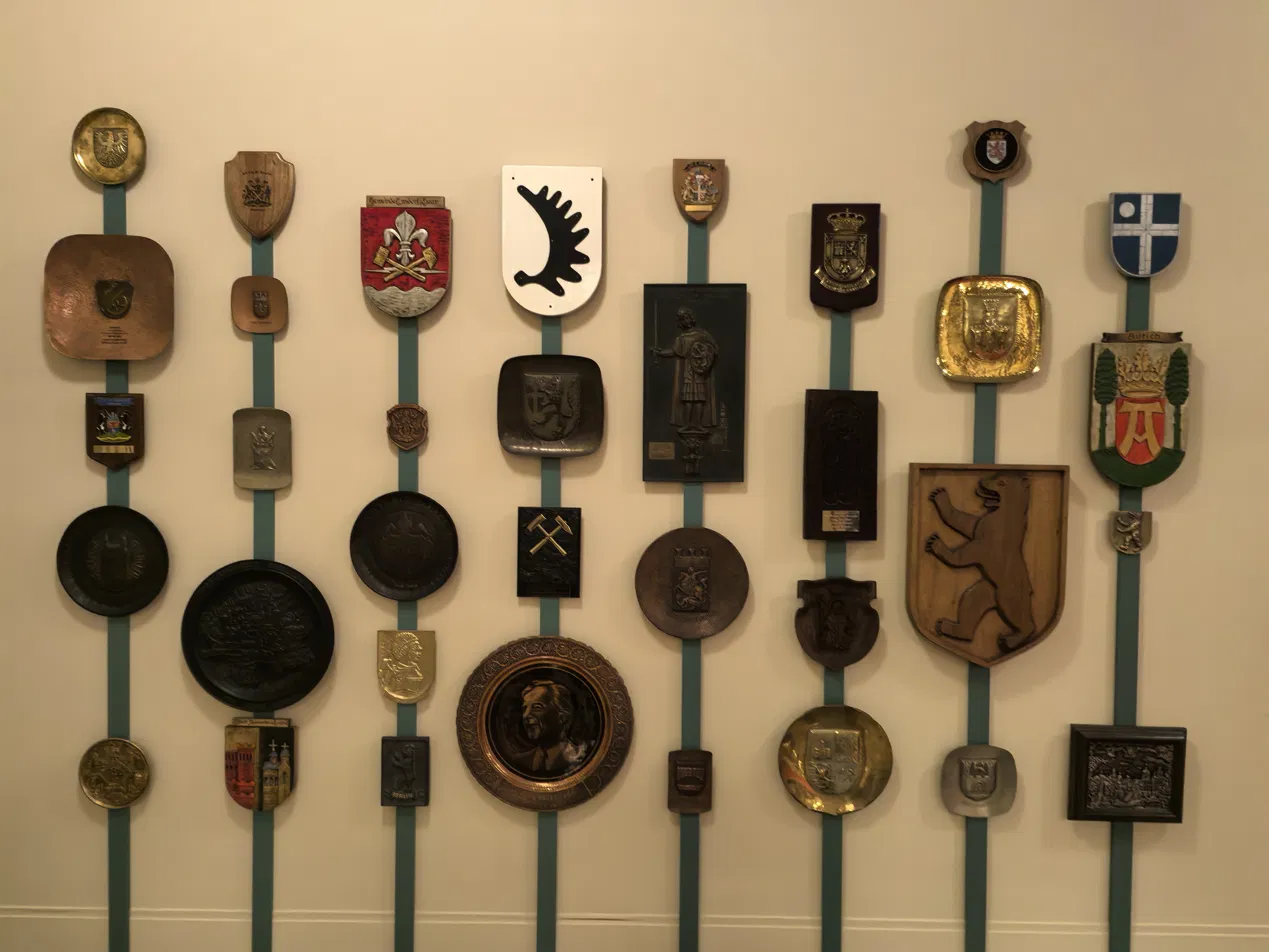
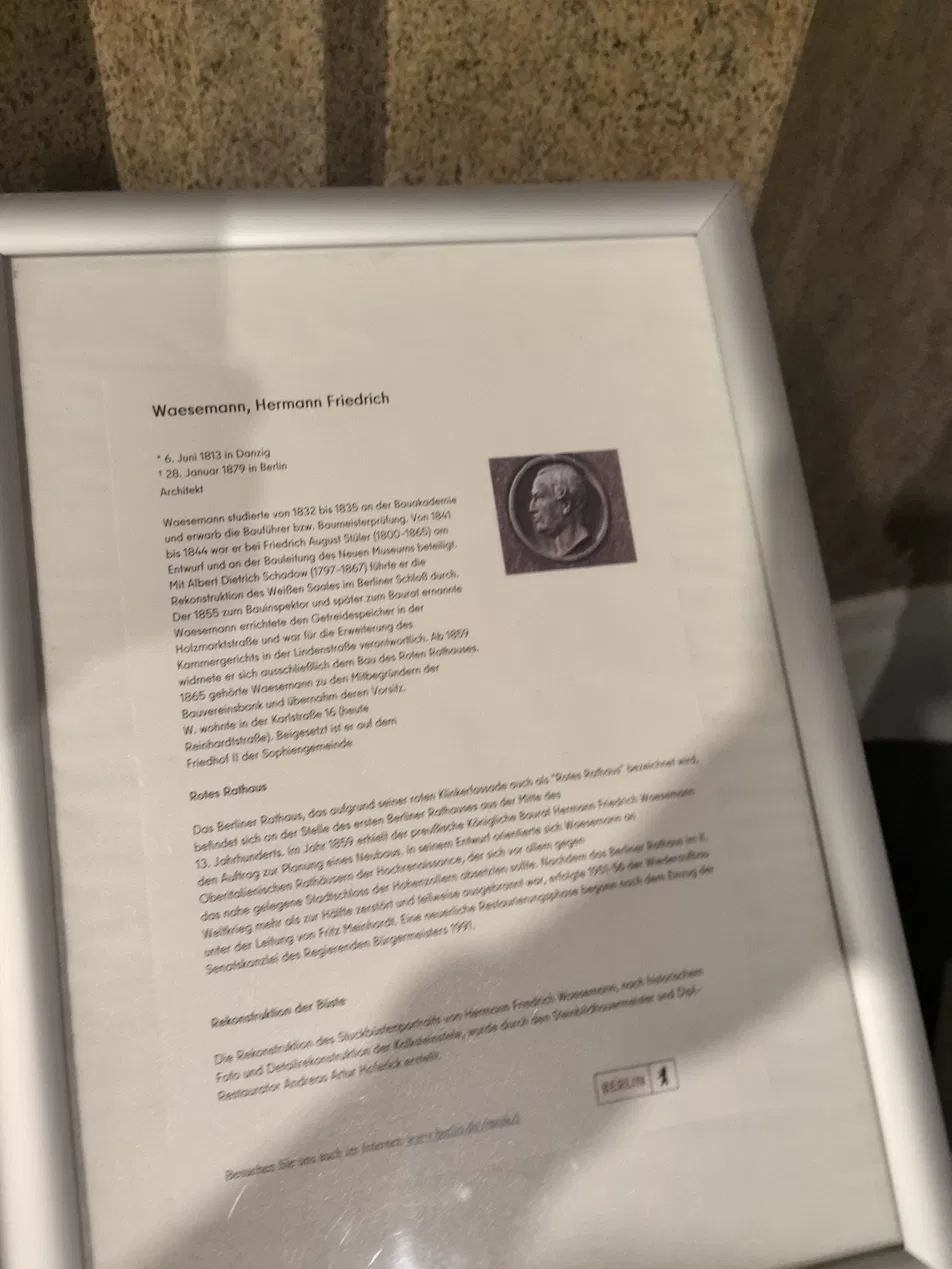
Prompted by Leipzig, the Red City Hall, and questions about the lost eastern lands (07-13, 07-14)
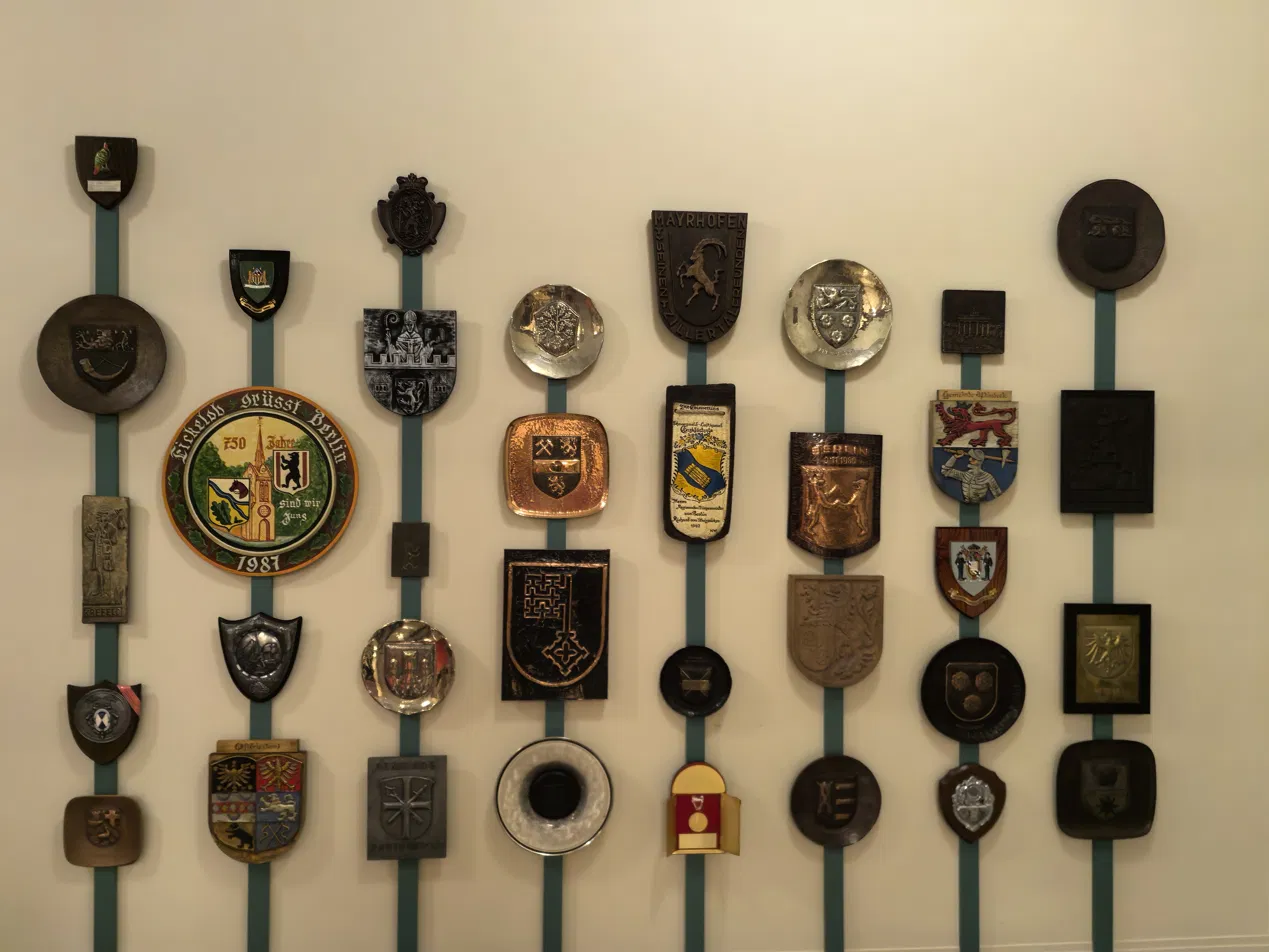
- Which German cities preserved their old architecture well?Despite heavy WWII bombing, some cities kept or restored their historic centers intact: Rothenburg (with complete medieval walls), Bamberg and Regensburg (both World Heritage old towns) stand out. France, less damaged by the war, preserved more of its medieval and Renaissance centers.
- What kind of city is Leipzig?The largest city in Saxony, it prospered in the Middle Ages at a crossroads of trade routes and is famous for the Leipzig Trade Fair; it holds an extraordinary place in music history (Bach was music director at the Thomaskirche for years, and Mendelssohn, Schumann and Wagner were all deeply tied to it), Leipzig University (1409) is among Germany's oldest, and its 1989 "Monday demonstrations" were a key force driving the GDR's peaceful revolution and ultimately the fall of the Wall.
- How do Germans view the eastern homelands lost after WWII?East Prussia, Silesia, Pomerania and other regions underwent one of history's largest population transfers after the war: some ten million Germans were expelled westward (as when Königsberg became Kaliningrad). It was a collective trauma German society took decades to process, and attitudes shifted over time from bitterness toward reflection and reconciliation.
IV · Poland & Eastern Europe
Polish history & relations with Russia/the USSR
Prompted by a running series of questions while in Poland (07-06, 07-08)
- Was Poland historically a weak state?Not at all. The 16th–17th-century Polish-Lithuanian Commonwealth was one of Europe's largest and strongest states, with an elective "noble democracy," and around 1610 it even occupied Moscow; only from the 17th century did endless wars turn it downward, until the great powers partitioned it out of existence in the late 18th century.
- Why is the grievance between Poland and Russia/the USSR so deep?It is one of Europe's most fraught relationships: Russia joined Prussia and Austria in three partitions (1772–1795) that erased Poland for 123 years; Poland then won the Polish-Soviet War of 1920–21; in 1939 the USSR, under the Molotov-Ribbentrop Pact, invaded alongside Nazi Germany and carried out the Katyn massacre; after WWII Poland was shifted ~200 km westward and became a Soviet satellite. Layer upon layer of old grievance persists to this day.
V · Asian History & Peoples
Modern South Korean political history
Prompted on 07-08
- What is the arc of South Korea's presidents and their records?From founding president Syngman Rhee, toppled by the April 19 Revolution over electoral fraud; to Park Chung-hee, who seized power in a coup and engineered the "Miracle on the Han River" through Five-Year Economic Plans before his authoritarian rule ended in assassination; through Chun Doo-hwan, who crushed the Gwangju democratization movement yet secured the Seoul Olympics; to Roh Tae-woo, the first directly elected president who pursued "Nordpolitik" — a winding line from authoritarianism to democratization and from poverty to economic takeoff.
The Soong sisters & modern China
Prompted on 07-13
- Who were the "three Chiang sisters," really, and what became of each?What I asked about as the "three Chiang sisters" were really the Soong sisters — eldest Soong Ai-ling (married the financier H. H. Kung), second Soong Ching-ling (married Sun Yat-sen and later leaned toward the Communists), and youngest Soong Mei-ling (married Chiang Kai-shek). Each married into one of modern China's most powerful families, yet their political stances diverged between Nationalists and Communists, and their fates moved with the whole of modern China.
China's ethnic groups: Hui, Qiang & Tibetan
Prompted on 07-12 and 07-14
- Where do the Hui come from?The Hui are one of China's 56 ethnic groups and its largest Muslim people; their origins trace mainly to Arab and Persian merchants and immigrants who arrived via the Silk Road and sea routes from the Tang and Song dynasties on, gradually forming through long intermarriage with local Han, Mongol and other peoples, bound together by Islam.
- How do the Qiang and Tibetans differ?The Qiang are a smaller people (~300,000), concentrated in Sichuan, speaking a Tibeto-Burman language and traditionally without a script of their own; the Tibetans are numerous, spread across the Tibetan Plateau, with a mature written script and Tibetan Buddhism. Though both belong to the Tibeto-Burman family and share historical roots, they differ clearly in population, region, language/script and religious culture.